



If you take creatine, you have almost certainly stirred a scoop into coffee. It is convenient. It tastes fine. And it is one of the most common ways to put two useful tools in the same hour without asking whether they belong there.
The question on the Creatine-JB page is not “is coffee bad?” and it is not “should I take creatine before or after my workout?” Once muscle stores are saturated, consistency beats the exact minute around training. The caffeine question is different. It is about whether the stimulant you use to open your eyes is the right liquid to carry creatine into the same window.
Xendurance’s position is unglamorous and specific: consume Creatine-JB any time of day, and keep it 1–3 hours before or after caffeine. The FAQ tightens the coffee example to an hour or more. That protocol did not come from marketing preference. It came from a 1996 Belgian loading study that still sits at the center of the literature, plus two decades of mixed follow-up that never fully closed the case.
What the Vandenberghe study actually measured
The paper the Creatine-JB FAQ points to is Vandenberghe, Gillis, Van Leemputte, Van Hecke, Vanstapel, and Hespel, published in the Journal of Applied Physiology in 1996: “Caffeine counteracts the ergogenic action of muscle creatine loading.”
Nine recreationally active men, ages 20–23, none of them highly trained, completed three conditions in random order, each separated by a three-week washout: placebo, creatine, and creatine plus caffeine. Creatine was dosed at 0.5 grams per kilogram of body weight per day for six days—loading-scale, not a 5-gram maintenance scoop. In the combined condition, caffeine was added at 5 milligrams per kilogram per day on days 5, 6, and 7. For a 70-kilogram athlete, that is about 350 milligrams of caffeine a day, far above a typical 8-ounce cup.
Muscle phosphocreatine in the calf was measured with 31P-NMR. Performance was a brutal intermittent knee-extension test on an isokinetic dynamometer: three maximal isometric contractions, then interval series of 90, 80, and 50 maximal voluntary contractions with two minutes of rest between series.
Both creatine alone and creatine plus caffeine raised muscle phosphocreatine by about 4–6%. Muscle ATP did not change. Caffeine did not stop creatine from getting into muscle, at least not in a way that showed up as a smaller phosphocreatine pool.
Performance told a different story. Dynamic torque rose 10–23% after creatine alone, with the biggest gains right after the two-minute rest between bouts—the window where phosphocreatine resynthesis matters most. That ergogenic effect was completely absent when caffeine had been taken during the loading period. Torque in the creatine-plus-caffeine condition looked like placebo.
The last caffeine capsule was at least 20 hours before testing. This was not a “drink espresso at the start line” study. The authors’ practical line was blunt: drinks that contain caffeine are an inappropriate vehicle for creatine.
That finding is why the FAQ exists. It is also why it is not enough, by itself, to ban coffee.
The mechanism that still makes the most sense
If caffeine does not block creatine uptake, what could it be doing?
In 2002, the same Leuven group published a follow-up in the Journal of Applied Physiology: “Opposite actions of caffeine and creatine on muscle relaxation time in humans.” Ten men completed electrically stimulated quadriceps contractions under creatine (20 grams per day for four days), short-term caffeine (5 mg/kg/day for three days), the combination, acute caffeine, or placebo.
Creatine shortened muscle relaxation time by about 5%. Short-term caffeine lengthened it by about 10%, especially as fatigue accumulated. The combination canceled the creatine advantage. Maximal torque and contraction time did not change. The authors concluded that multi-day caffeine intake prolongs relaxation time and, by that action, overrides the shortening produced by creatine.
That is a functional story, not a storage story. Faster relaxation helps a muscle reset between repeated high-intensity contractions. If caffeine slows that reset, the extra phosphocreatine in the cell may still be there—and still not show up as better intermittent torque.
A pharmacokinetic interaction is unlikely. Reviews have not shown that caffeine stops creatine from reaching muscle or that the two meaningfully change each other’s blood levels. Gastrointestinal stress is the other plausible explanation. When Trexler and colleagues loaded creatine with caffeine anhydrous, four subjects reported mild GI discomfort in the combined arm and none in the other groups. Coffee in that same trial did not produce the same reports. Co-ingestion can be a gut problem before it is a muscle problem.
Why this is not the last word
The Vandenberghe trial is small, male, young, and built on a loading-scale creatine dose plus a high caffeine dose. A 5-gram daily scoop of Creatine-JB mixed into a normal cup of coffee is not the same protocol. It would be dishonest to pretend it is.
Later work is mixed, and the timing of caffeine matters.
In 2002, Doherty, Smith, Davison, and Hughes loaded trained men with creatine for six days while they abstained from caffeine, then gave a single 5 mg/kg caffeine dose one hour before a treadmill run to exhaustion at 125% VO2max. Time to exhaustion rose after acute caffeine. Caffeine taken after stores were already loaded, and after a caffeine washout, was ergogenic. That is a different design from “caffeine every day during the load.”
Trexler and Smith-Ryan reviewed the concurrent-use literature in the International Journal of Sport Nutrition and Exercise Metabolism in 2015. Their conclusion still holds: evidence that caffeine can blunt creatine’s benefit exists, but it is scarce; a pharmacokinetic interaction is unlikely; opposing effects on muscle relaxation time, or GI stress from taking both at once, are more plausible. The literature is not settled.
Two later systematic reviews reached a similar split. Elosegui, Murillo-Rodríguez, and Pareja-Galeano (2022, IJSNEM) found that creatine loading does not appear to cancel an acute pre-exercise caffeine dose, but chronic caffeine during a creatine-loading period can interfere with creatine’s benefit. Elisio and colleagues (2021/2023, Critical Reviews in Food Science and Nutrition) reported additional benefit when caffeine was taken acutely after a creatine load in three of five studies, and little apparent benefit when caffeine was ingested daily during the load.
A 2022 randomized trial by Pakulak, Candow, Totosy de Zepetnek, Forbes, and Basta put creatine, caffeine, both, or placebo alongside eight weeks of resistance training in trained young adults. Creatine alone produced the clearest increase in knee-extensor muscle thickness. The combination was not dramatically worse, and it was not better. That is a real-world training study, not a dynamometer protocol, and it still does not give co-ingestion a free pass.
Mayo Clinic’s consumer summary is as cautious as the FAQ: taking caffeine and creatine together might reduce how well creatine works, but more research is needed.
The honest read of 30 years of data is this: the strongest interference signal appears when caffeine is taken daily during creatine loading, and the test is repeated high-intensity work that depends on fast muscle reset. Acute caffeine after stores are already full is a different experiment. A 5-gram maintenance scoop in coffee is closer to the first situation than athletes like to admit, and it is not identical to Vandenberghe’s 0.5 g/kg load plus 5 mg/kg caffeine.
Xendurance’s position follows from that uncertainty. Why risk the possibility that creatine’s benefit is diminished when waiting an hour costs almost nothing?
A protocol you can actually keep
You do not have to drop coffee. You do not have to drop creatine. You separate them.
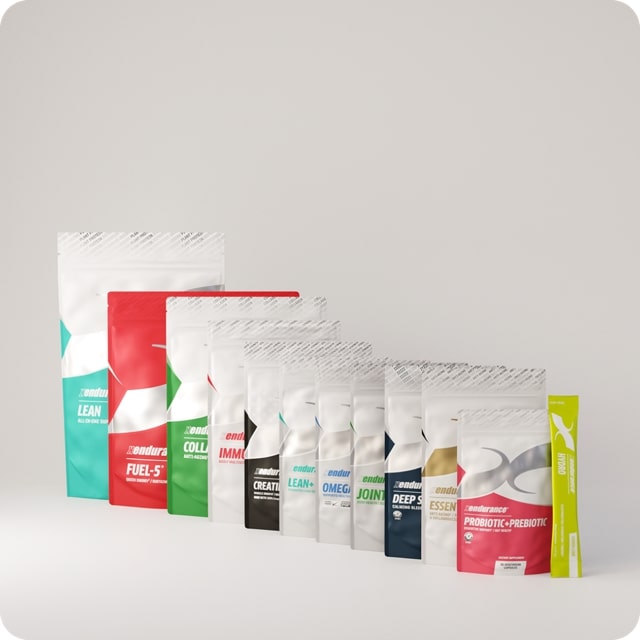
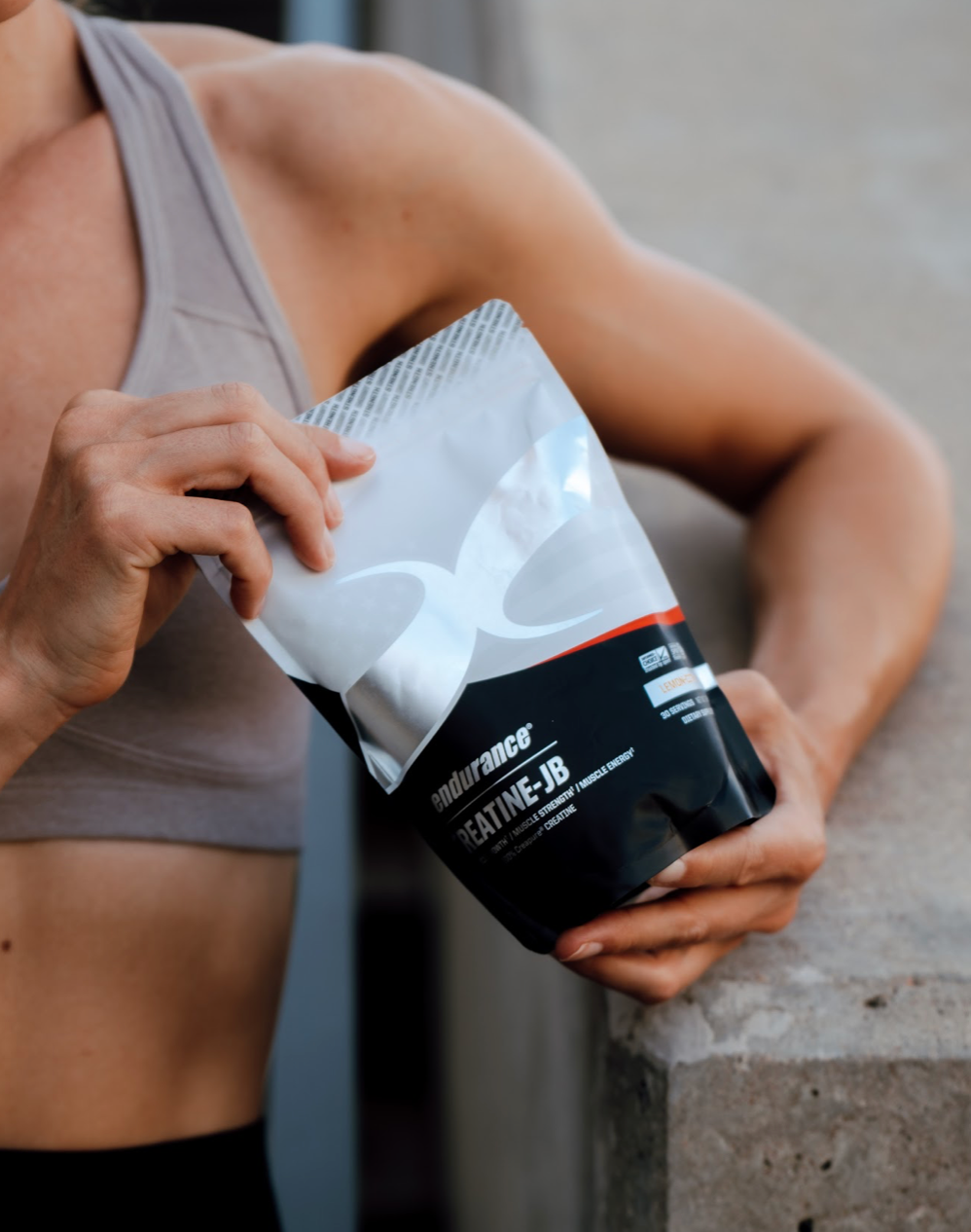
Creatine-JB’s usage line is specific: consume it any time of day, and keep it 1–3 hours before or after caffeine. One scoop in 4–6 ounces of liquid. Mixers on the same page are water, Fuel-5, or Hydro. Those mixers do not add a stimulant on top of the creatine.
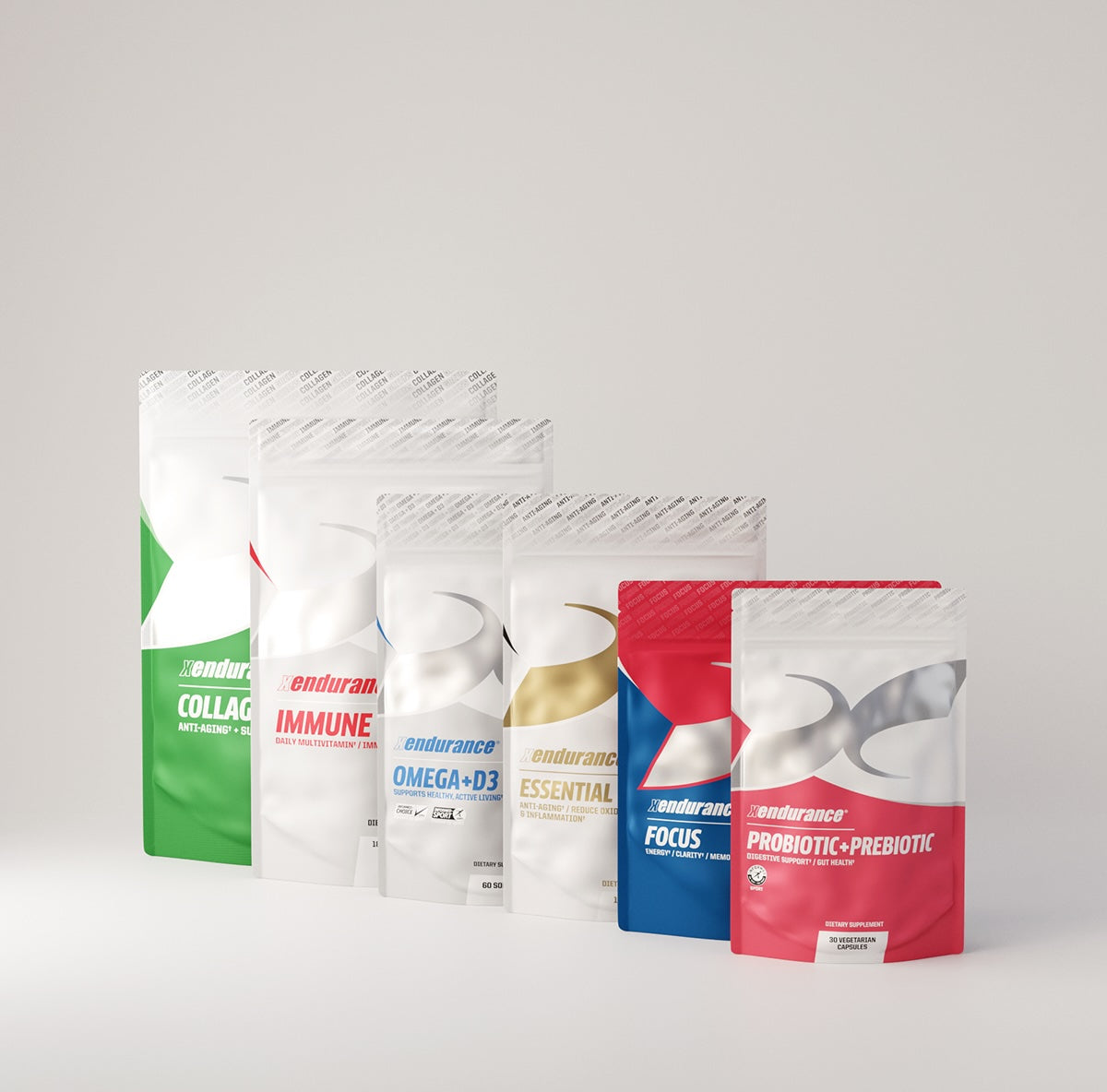
Focus does. Focus lists 130 mg of caffeine from green tea extract per serving, versus about 95 mg in a typical 8-ounce cup of coffee. If Focus is your pre-workout, take Creatine-JB in a different hour—morning creatine and mid-morning Focus, or creatine with Hydro after training and coffee earlier. Pick the split you will actually repeat.
The dose does not change because of caffeine. Creatine-JB is 5 grams of Creapure creatine monohydrate plus 2 grams of lactate. There is no loading phase and no cycling phase. The European Food Safety Authority has authorized a health claim for creatine at a daily intake of 3 grams related to increased physical performance in successive bursts of short-term, high-intensity exercise. A U.S. expert panel cited on the product page concluded that up to 5 grams per day does not pose a risk to consumers. Creapure’s manufacturer, AlzChem, recommends 3–5 grams. Five grams is the serving.
The International Society of Sports Nutrition’s 2017 position stand remains the broadest safety document in the field: creatine monohydrate is effective for high-intensity capacity and lean mass during training, and short- and long-term use at studied doses has a strong safety record in healthy people. Consistency, not the clock next to the barbell, is what keeps stores up.
Drink water. The FAQ notes caffeine’s diuretic effect as one more reason not to treat coffee as the hydration plan that sits next to creatine. Creatine draws water into muscle. Coffee is not a substitute for that plan.
What this is not asking you to do
This is not a request to time creatine to the first squat. That clock mostly does not matter once you take it daily, including rest days.
This is not a request to fear coffee. Coffee can stay in the day. It is a poor creatine mixer.
This is not a claim that every cup of coffee cancels every gram of creatine in every athlete. The best-known interference data come from a loading study with high-dose caffeine, supported by a relaxation-time study from the same laboratory, and only partly reproduced since. The honest read is: the interaction is plausible enough, the GI risk of stacking them is real enough, and the downside of waiting an hour is small enough that separation is the rational default.
The simple version
Take creatine every day to keep muscle stores up. Take caffeine when you want it for alertness. Do not pour them into the same glass, and give them 1–3 hours of space. If you want a mixer that supports the rest of the session, use water, Hydro, or Fuel-5—not coffee, and not Focus in the same sitting.
Two tools.
Two clocks. That is the whole protocol.
Primary studies and reviews
Vandenberghe K, et al. Caffeine counteracts the ergogenic action of muscle creatine loading. J Appl Physiol. 1996;80(2):452-457. https://doi.org/10.1152/jappl.1996.80.2.452 · PubMed: https://pubmed.ncbi.nlm.nih.gov/8929583/
Hespel P, Op ’t Eijnde B, Van Leemputte M. Opposite actions of caffeine and creatine on muscle relaxation time in humans. J Appl Physiol. 2002;92(2):513-518. https://doi.org/10.1152/japplphysiol.00255.2001 · PubMed: https://pubmed.ncbi.nlm.nih.gov/11796658/
Doherty M, Smith PM, Davison RCR, Hughes MG. Caffeine is ergogenic after supplementation of oral creatine monohydrate. Med Sci Sports Exerc. 2002;34(11):1785-1792. https://pubmed.ncbi.nlm.nih.gov/12439084/
Trexler ET, Smith-Ryan AE. Creatine and caffeine: considerations for concurrent supplementation. Int J Sport Nutr Exerc Metab. 2015;25(6):607-623. https://doi.org/10.1123/ijsnem.2014-0193 · PubMed: https://pubmed.ncbi.nlm.nih.gov/26219105/
Trexler ET, et al. Effects of coffee and caffeine anhydrous intake during creatine loading. J Strength Cond Res. 2016;30(5):1438-1446. https://pubmed.ncbi.nlm.nih.gov/26439785/
Elosegui S, et al. Interaction between caffeine and creatine when used as concurrent ergogenic supplements: a systematic review. Int J Sport Nutr Exerc Metab. 2022;32(4):285-295. https://doi.org/10.1123/ijsnem.2021-0262 · PubMed: https://pubmed.ncbi.nlm.nih.gov/35016154/
Elisio et al. Effects of creatine and caffeine ingestion in combination on exercise performance: a systematic review. Crit Rev Food Sci Nutr. 2023;63(20):4785-4798. https://doi.org/10.1080/10408398.2021.2007470 · PubMed: https://pubmed.ncbi.nlm.nih.gov/34845944/
Pakulak A, et al. Effects of creatine and caffeine supplementation during resistance training… J Diet Suppl. 2022;19(5):587-602. https://doi.org/10.1080/19390211.2021.1904085 · PubMed: https://pubmed.ncbi.nlm.nih.gov/33759701/
Kreider RB, et al. ISSN position stand: safety and efficacy of creatine supplementation. J Int Soc Sports Nutr. 2017;14:18. https://doi.org/10.1186/s12970-017-0173-z · PubMed: https://pubmed.ncbi.nlm.nih.gov/28615996/
EFSA NDA Panel. Scientific opinion on health claims related to creatine and increase in physical performance during short-term, high-intensity, repeated exercise bouts. EFSA Journal. 2011;9(7):2303. https://doi.org/10.2903/j.efsa.2011.2303

コメントを書く
このサイトはhCaptchaによって保護されており、hCaptchaプライバシーポリシーおよび利用規約が適用されます。