



Imagine waking up each morning with the vitality of someone a decade younger. Not through grueling workouts or exotic diets, but by giving your body a nutrient it craves—one that's as easy to incorporate as popping a pill. We're talking about extending your lifespan, not in some sci-fi lab, but right now, in the comfort of your daily routine. Science is revealing that biological aging isn't just about the wrinkles or the gray hairs; it's a cellular battle happening deep inside, where tiny structures called telomeres hold the key to how long your cells—and you—stay youthful. And recent breakthroughs show that something as straightforward as vitamin D supplementation might be a game-changer in slowing that battle down.
We've all heard the basics for a longer life: move more, eat greens, prioritize sleep. These are pillars of health that can add quality years. But what if I told you that emerging research points to a hidden accelerator of aging—one you can counteract with a nutrient many of us are deficient in, especially if you live north of the equator or spend your days indoors? Enter telomeres, the unsung heroes of your DNA, and the exciting evidence that vitamin D can protect them. This isn't about chasing immortality; it's about empowering everyday folks like you and me to age more gracefully, with fewer aches, sharper minds, and hearts that beat stronger for longer.
The Tiny Guardians of Your Genetic Blueprint
To understand why this matters, let's zoom in on the microscopic level. Picture your chromosomes—the coiled threads of DNA that carry your genetic instructions—like the laces on a pair of well-worn sneakers. At the ends of those laces are little plastic tips that prevent fraying. Those tips? Telomeres. They're repetitive sequences of DNA that cap the ends of your chromosomes, acting as buffers during cell division. Every time a cell splits to replace old tissue or heal a wound, it copies its DNA. But the copying process isn't perfect; it's like photocopying a long document where the edges get cropped each time. Telomeres absorb that loss, shortening instead of your vital genes.
In a healthy body, an enzyme called telomerase can sometimes add back length to these caps, especially in stem cells or immune fighters. But as we age, telomerase activity wanes, and telomeres inevitably shorten. For the average person, this happens at a steady clip—about 20 to 50 base pairs (the building blocks of DNA) per year after age 40. It's a natural process, but lifestyle factors like stress, poor diet, smoking, and even chronic inflammation can speed it up dramatically.
When telomeres get too short? The cell hits a wall. It can't divide anymore without risking DNA damage, so it enters a state called senescence—like a factory worker retiring prematurely and just sitting idle, spewing low-level inflammatory signals that irritate the whole system. Or worse, it might go rogue and contribute to cancer if safeguards fail. This isn't abstract biology; it's why your skin sags, your muscles weaken, and your immune system falters. Short telomeres are like a countdown timer on your cells' productivity.
Why Telomere Shortening Spells Trouble—and How It Fuels Biological Aging
Here's the kicker: telomere length isn't just a bystander in aging; it's a core driver. Biologically, we age not by calendar years, but by how "old" our cells feel. Telomeres serve as a molecular clock, ticking down your cellular lifespan. When they shorten excessively, it triggers a cascade of woes that hit hard in midlife and beyond.
First, the bad news on health. Shorter telomeres correlate with a laundry list of age-related diseases. Heart disease? Check—studies show people with the shortest telomeres are up to 40% more likely to develop atherosclerosis, where arteries clog and blood flow stalls. Type 2 diabetes? Yep, as telomere attrition impairs insulin sensitivity in fat and muscle cells. Even cognitive decline gets a boost; shorter telomeres in brain cells link to faster memory loss and higher Alzheimer's risk. And don't get me started on immune function—telomere shortening in white blood cells (leukocytes) leads to "immunosenescence," where your defenses weaken, making infections and autoimmune issues more common.
For the everyday person juggling work, family, and that nagging back pain, this means more sick days, slower recoveries from workouts, and a creeping sense of fatigue that no amount of coffee fixes.
On the aging front, it's even more profound. Biological age—how old your body acts versus your birth certificate—often tracks telomere length better than chronological age. Research from the Framingham Heart Study, tracking thousands over decades, found that for every 1,000 base pairs of telomere shortening, your risk of death from any cause jumps by about 25%. It's like accelerating from a steady drive to slamming the gas on entropy. Inflammation spikes (hello, "inflammaging"), tissues repair more slowly, and your metabolic engine sputters.
The result? You might be 50 on paper but feel 65, with joints that creak during weekend hikes or skin that heals from nicks like it's auditioning for a raisin commercial.
But here's the empowering part: telomere shortening isn't inevitable doom. Lifestyle tweaks like Mediterranean diets, regular cardio, and stress-busters like meditation can slow it by up to 10-20%. And now, science is spotlighting nutrients that intervene directly at the telomere level—starting with vitamin D.
A Groundbreaking Study: Vitamin D's Four-Year Defense Against the Cellular Clock
A landmark clinical trial is turning heads in the longevity world. Published in May 2025 from the VITamin D and OmegA-3 TriaL (VITAL), this was no small potatoes: over 25,000 U.S. adults, mostly over 50, randomized to daily supplements or placebo for a whopping four years. The vitamin D arm? A straightforward 2,000 IU of D3 per day—about double the typical recommendation but well within safe limits.
The outcome? Game-changing. Among 1,054 participants whose telomeres were measured via blood samples, those on vitamin D showed significantly less shortening—140 fewer base pairs lost compared to placebo. That's equivalent to pushing back three to five years of natural aging, per estimates from telomere experts. Even better, this held true whether folks were deficient in vitamin D at baseline or not, and it worked independently of the omega-3 component in the trial. Immune cells, in particular, benefited, hinting at boosted defenses against inflammaging.
Why does vitamin D pull this off? It likely dials down oxidative stress and inflammation—telomere shortening's biggest culprits—while possibly nudging telomerase activity. For the average Joe or Jane, this translates to real-world wins: think fewer colds, better workout recoveries, and maybe even dodging that family history of early heart issues.
The study, led by Mass General Brigham researchers, called it the first large-scale proof that vitamin D preserves telomere length, sparking headlines from Harvard Health to the NIH.
Building on the Evidence: Other Studies and the Omega-3 Synergy
This isn't a one-off. Earlier observational data from the Women's Health Initiative tied low vitamin D levels to 20-30% shorter telomeres in postmenopausal women, a group prone to bone loss and frailty. A 2023 meta-analysis of 10 studies confirmed: higher circulating vitamin D correlates with longer telomeres across diverse populations, from office workers in Finland to farmers in India. And for those with deficiencies (hello, 40% of Americans per CDC stats), correcting it via supplements could be a low-hanging fruit for staving off cellular wear.
Enter omega-3s, the fatty acids from fish oil that often tag-team with vitamin D. While VITAL didn't see a standalone telomere boost from 1g daily EPA/DHA, other research does. A 2010 UCSF study of 600+ women found higher blood omega-3 levels slashed telomere shortening rates by 35%—the equivalent of five years' less aging. Fast-forward to 2022: a trial in older adults showed 2g omega-3s daily preserved leukocyte telomeres while curbing inflammation markers like C-reactive protein. Why the combo magic? Omega-3s quench free radicals that nick telomeres, while vitamin D enhances their absorption (it's fat-soluble, after all). For the desk-bound parent or retiree golfer, this duo means less joint stiffness on rainy days and clearer thinking during book club.
Bringing It Home: Telomere Protection for the Everyday You
So, how does this land for someone who's not a lab rat? Simple: Test your vitamin D levels (a quick blood draw at your doc's), aim for 30-50 ng/mL, and consider 1,000-2,000 IU daily if you're low—especially in winter when sunlight's scarce. Pair it with fatty fish twice a week or a quality supplement. No need for telomere-testing kits (they're pricey and not FDA-cleared for prognosis); focus on feeling the benefits: more energy, fewer sniffles, resilient skin.
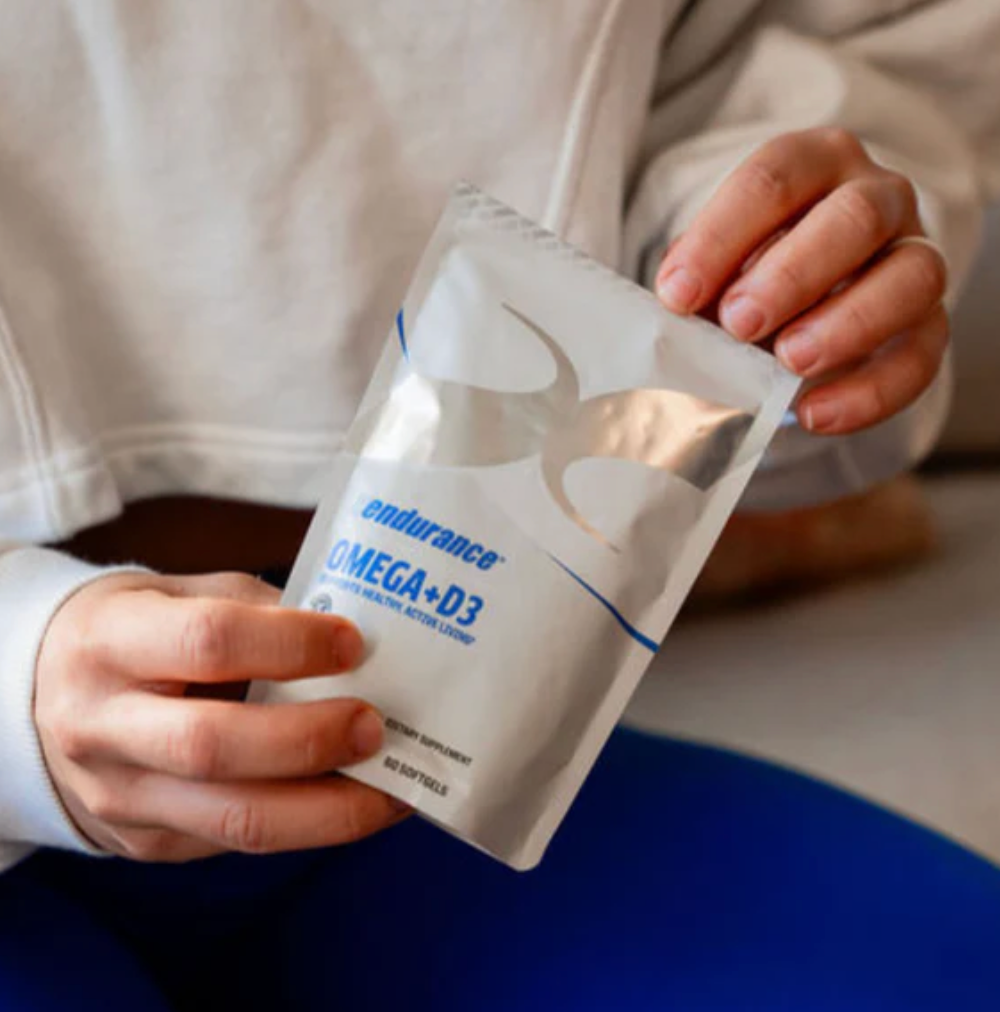
One product standing out in this space is Xendurance Omega+D3. This isn't your grandma's cod liver oil—it's a potent 2-in-1 capsule packing 1,000 mg of triglyceride-form EPA and DHA (absorbed 70% better than cheaper ethyl esters) alongside a robust 4,000 IU of vitamin D3.
Why does it shine for telomere health? The omega-3s tackle inflammation at its root, a telomere shortener extraordinaire, while the high-dose D3 directly shields those DNA caps, as VITAL proved. Users rave about reduced joint pain and faster recovery from life's curveballs, like hauling groceries or chasing grandkids—hallmarks of slowed biological aging.
Xendurance formulated it for peak absorption, with the vitamin D aiding calcium uptake for bones that stay strong into your 70s. Inflammation? Tamed, so you sidestep the "silent killer" behind 70% of chronic diseases. And for brain health, the combo supports cognitive sharpness, warding off that mid-afternoon fog.
Your Next Step Toward a Longer, Vibrant Life
Telomeres remind us: aging is a process we can influence, not endure. That VITAL study isn't just data—it's permission to act. By slowing shortening with vitamin D (and allies like omega-3s), you're not just buying time; you're investing in mornings where you leap out of bed, evenings filled with laughter instead of Netflix binges from exhaustion. Start small: Get outside for 15 minutes of sun, load up on salmon salads, or grab a bottle of Omega+D3. Your cells will thank you—with longer caps, fewer senescent grumps, and a body that hums with youth.
In the end, longevity isn't about perfection; it's about consistent, joyful choices. Who knows? In four years, you might look in the mirror and see not just fewer lines, but a reflection of the vibrant life you're building, one protected telomere at a time.



コメントを書く
このサイトはhCaptchaによって保護されており、hCaptchaプライバシーポリシーおよび利用規約が適用されます。