




Ask endurance athletes about omega-3, and you hear two habits: a capsule every morning, or a bigger dose only after the long run, HYROX sim, or race that trashed the legs.
Those habits answer different questions. Caffeine and many carbs are acute tools. You feel them in hours. Long-chain omega-3s—EPA and DHA—mostly work by changing cell-membrane composition over weeks, not by lighting up the afternoon you swallow them.
So: should endurance athletes take omega-3 every day, or only after hard sessions?
Short answer
Many athletes run low on EPA + DHA status. In 404 NCAA Division I football athletes, none had an Omega-3 Index in the low-risk zone (above 8%); about one-third were under 4%. Elite winter endurance athletes show a similar pattern. The International Society of Sports Nutrition concludes athletes may be at higher risk of omega-3 insufficiency; diet and supplements can raise levels; EPA/DHA has been shown to enhance endurance capacity and cardiovascular function during aerobic-type exercise; and supplementation may reduce subjective soreness after hard work.
Raising tissue EPA/DHA is a chronic process. Under repeated supplemental dosing, EPA and DHA approach peak red-blood-cell incorporation on the order of about 55 and 136 days. Twelve weeks of daily high-dose EPA + DHA during endurance training raised the Omega-3 Index and improved VO2peak and running economy in amateur runners—without a unique between-group win on a 1500 m trial.
“Only after hard sessions” does not match membrane remodeling. Hard days still drive training adaptations. Omega-3 status is built by consistent intake.
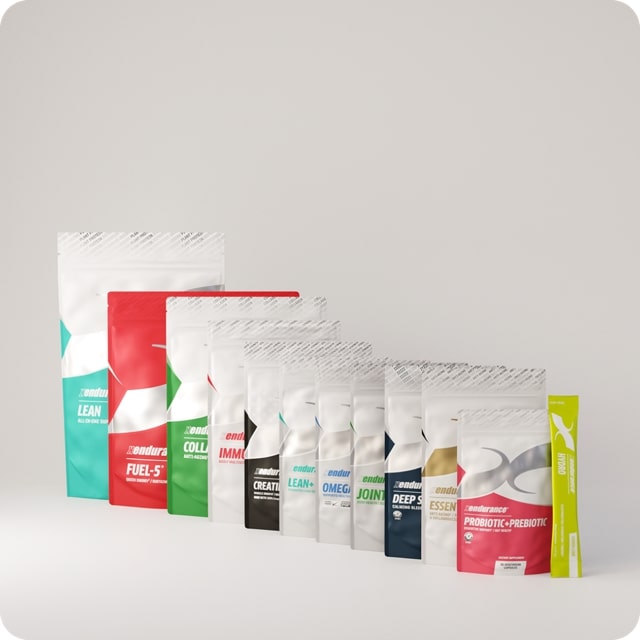
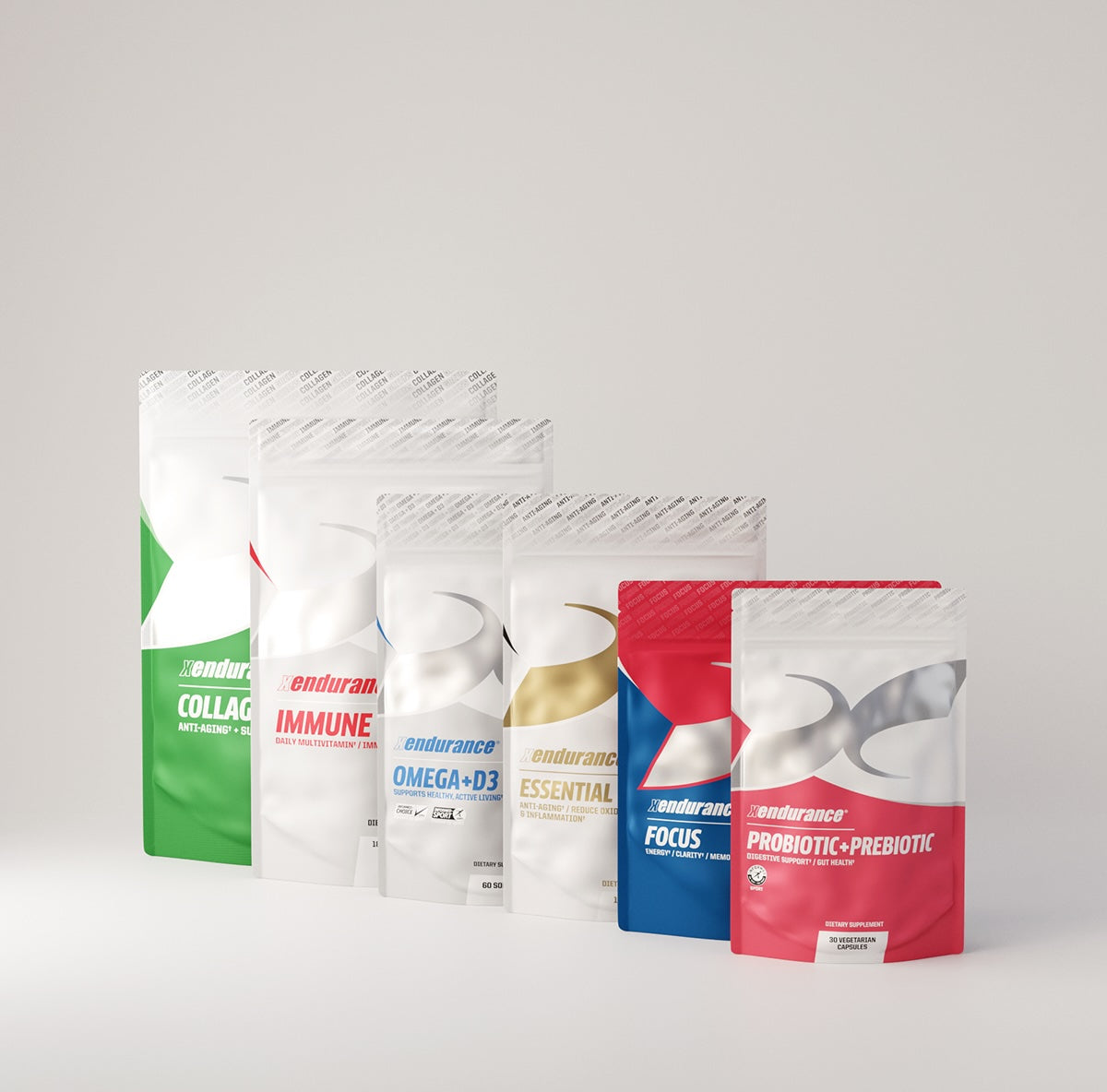
Xendurance Omega+D3 is labeled for 1 capsule with the morning meal and 1 with the evening meal, delivering 1,000 mg EPA/DHA in triglyceride form plus 4,000 IU vitamin D3 per daily serving. That is a daily status habit, not a post-race bolus. It is also two products in one: a triglyceride omega-3 and a high-dose vitamin D3 in the same routine.
This is not medical advice. Anticoagulants, bleeding risk, high-dose vitamin D, and personal health status need a clinician’s input.
Why “only when I’m sore” misses the mechanism
EPA and DHA sit in phospholipid membranes. Status is often tracked with the Omega-3 Index—EPA + DHA as a percent of red-blood-cell fatty acids—because that reflects longer-term intake, not yesterday’s capsule.
ISSN’s athlete-facing conclusions stay practical: insufficiency risk is real; food and supplements both work; aerobic and cardiovascular responses during endurance-type exercise are among the better-supported findings; soreness may ease with supplementation. None of that is framed as a same-day recovery shot.
Browning and colleagues showed multi-week to multi-month schedules for EPA and DHA to approach peak red-blood-cell incorporation when people took doses similar to oily-fish intake. The ISSN stand also notes skeletal-muscle membrane remodeling on the order of weeks with fish-oil protocols. If biology takes weeks, skipping easy days and “loading” only when sore is the wrong model.
Think of omega-3 like iron status or vitamin D status, not like an ice bath in a pill. You do not rebuild a membrane by megadosing once. You change the fatty-acid mix of that membrane by showing up most days.
That is why the timing question is less “when does it kick in after the long run?” and more “are you actually raising the Omega-3 Index over the next two to four months?”
What the endurance data actually shows
Amateur male long-distance runners taking 2,234 mg EPA + 916 mg DHA daily for 12 weeks during supervised endurance training raised mean Omega-3 Index from about 5.8% to 11.6%, increased VO2peak, and improved running economy at 12 km/h. A 1500 m time trial improved with training in both omega-3 and placebo groups, with no between-group race edge from the supplement alone.
That study is useful because it is honest. Daily omega-3 is not a substitute for training, fueling, or sleep. It is a background status play that can support aerobic markers when dose and duration actually move the Omega-3 Index.
Surveys keep showing the starting point is often poor. Besides the football cohort with zero athletes above 8%, only one of 106 German elite winter endurance athletes hit the target range in a pilot study. NIH’s Office of Dietary Supplements notes U.S. adults average only about 90 mg/day of EPA + DHA from food—far below many intervention doses. Plant ALA helps, but conversion to EPA and especially DHA is limited. Taking EPA and DHA directly is the practical way to raise those levels.
For a runner, cyclist, triathlete, or HYROX athlete, that matters because membranes are not decorative. They are where signaling, inflammation control, and cardiovascular function live. If your baseline is low, a single post-race capsule does not close the gap.
Daily habit vs hard-day-only
Daily—or near-daily—intake matches raising and holding the Omega-3 Index, ISSN’s emphasis on ongoing diet and supplement strategies, and trials that used weeks to months of continuous dosing before measuring endurance-relevant outcomes.
Hard-session-only feels intuitive if you treat omega-3 like an anti-inflammatory ice bath. Soreness can improve in some chronic protocols, but those regimens are still daily for weeks, not a single post-race megadose proved to remodel membranes overnight.
A clean rule of thumb:
- Build status with consistent EPA + DHA.
- Keep hard-day recovery tools for carbs, protein, sleep, and electrolytes when sweat demands them.
- Do not expect one post-race fish-oil bolus to replace weeks of intake.
If you already eat oily fish several times a week, a modest daily capsule can still help hold status during high-volume blocks when appetite, travel, or race-week logistics make fish inconsistent. If you almost never eat salmon, sardines, mackerel, or herring, daily EPA/DHA is the more reliable path.
Form matters: why triglyceride omega-3s are the better daily tool
Not all fish-oil capsules are the same molecule. Natural EPA and DHA in fish are almost entirely in triglyceride form: three fatty acids attached to a glycerol backbone. Many concentrated supplements convert that oil into ethyl esters so they can pack more EPA and DHA into a smaller capsule. Ethyl esters are cheaper to manufacture. They are also a different structure than the fat your gut is built to handle.
Xendurance uses the triglyceride form in Omega+D3 for that reason. The triglyceride fish oil is absorbed about 70% better than ethyl ester omegas and that the natural form reduces the risk of molecular instability. That claim tracks with head-to-head human work: re-esterified triglyceride oils have shown higher relative bioavailability than ethyl esters at comparable EPA + DHA doses, and ethyl ester absorption is more meal-dependent.
For endurance athletes, that difference is not trivia. You are trying to raise tissue EPA/DHA over weeks. A form that absorbs more reliably with meals—especially when breakfast is oatmeal and dinner is a modest training plate—gives the daily habit a better chance of actually moving the Omega-3 Index. Ethyl esters can still work, particularly with a high-fat meal. Triglycerides are simply closer to food-state fat and less picky about the meal next to them.
Omega+D3’s is built around that daily absorption window: one capsule with the morning meal, one with the evening meal. That split is not marketing decoration. Fat-soluble nutrients land better with food, and two smaller doses across the day match how people actually eat.
Omega+D3 is really two products in one
Endurance athletes do not only run low on omega-3. Vitamin D status is another common gap, especially in winter, indoor-training blocks, early-morning sessions, and athletes who spend more time in a garage gym than in midday sun. Vitamin D is fat-soluble. Pairing it with a triglyceride omega-3 is biochemically coherent: you are taking both with meals, and you are covering two status nutrients that do not work as same-day race gels.
That is why Omega+D3 is framed as two products in one premium formula. The label delivers:
- 1,000 mg EPA/DHA in triglyceride form per daily serving
- 4,000 IU vitamin D3 in the same product
- Usage: 1 capsule with the morning meal, 1 with the evening meal
- Support language for heart, brain, joint mobility, bone, and immune function
- Informed Sport certification
You do not need a separate fish-oil bottle and a separate high-dose D3 bottle if this stack matches what your clinician is comfortable with. That is the practical meaning of “two products in one”: fewer bottles, one daily rhythm, both nutrients taken with food.
Practical takeaways for endurance athletes and omega-3s
- Treat EPA/DHA like a daily status nutrient, not like caffeine or intra-workout carbs.
- Literature pattern: weeks of intake → higher Omega-3 Index → possible aerobic and economy support—not a same-day race gel.
- Many athletes start low. Intentional food and/or supplement intake is how status moves.
- Triglyceride-form EPA/DHA is the closer-to-food option and is generally better absorbed than ethyl esters, which is why Omega+D3 uses that form.
- Omega+D3 is two products in one: 1,000 mg triglyceride EPA/DHA plus 4,000 IU vitamin D3, taken as one capsule with breakfast and one with dinner.
- If you use Omega+D3, follow the label. Do not turn it into an “only after the long run” product.
- This is not medical advice.
The better question is not whether omega-3 can rescue a wrecked set of legs tonight. It is whether your membranes have had enough EPA and DHA, for enough weeks, to show up in the Omega-3 Index. Daily intake matches that biology. Hard-session-only does not.
Sources:
Jäger R, et al. ISSN Position Stand: Long-Chain Omega-3 PUFAs. J Int Soc Sports Nutr. 2025.
Anzalone A, et al. The Omega-3 Index in NCAA Division I Football Athletes. J Athl Train. 2019.
Tomczyk M, et al. Effects of 12 Wk of Omega-3 Fatty Acid Supplementation in Long-Distance Runners. Med Sci Sports Exerc. 2023.
Browning LM, et al. Incorporation of EPA and DHA into lipid pools. Am J Clin Nutr. 2012. von Schacky C, et al. Low omega-3 index in 106 German elite winter endurance athletes. Int J Sport Nutr Exerc Metab. 2014.
Harris WS, von Schacky C. The Omega-3 Index. Prev Med. 2004.
NIH ODS. Omega-3 Fatty Acids — Health Professional Fact Sheet.
Dyerberg J, et al. Bioavailability of marine n-3 fatty acid formulations. Prostaglandins Leukot Essent Fatty Acids. 2010. (triglyceride vs ethyl ester absorption)



Leave a comment
This site is protected by hCaptcha and the hCaptcha Privacy Policy and Terms of Service apply.