



If you take creatine, you’ve almost certainly asked the same question that tops the FAQ list for Xendurance Creatine-JB: When should I take it—before or after my workout?
It’s one of the most common queries from athletes who want every possible edge in strength, power, and recovery.
A 2026 study published in Nutraceuticals directly tested that question in trained young adults and delivered a clear, practical answer that should reshape how most of us think about timing.
The paper, titled “Comparison of Creatine Monohydrate Supplementation Immediately Before Versus Immediately After Resistance Training Sessions in Trained Young Healthy Adults” by Mills, Candow, and colleagues, examined 5 g of creatine monohydrate taken either right before or right after training for 16 weeks.
The short version: timing made no meaningful difference, and in this particular group of already-trained individuals, the extra creatine on training days alone did not significantly outperform placebo for body composition or performance.
That finding is more useful than it first sounds—especially if you train for CrossFit, HYROX, hybrid events, or any form of serious resistance work.
What Resistance Training Actually Encompasses
Resistance training is any activity that forces muscles to work against an external load or force. Classic examples include barbell squats, deadlifts, bench presses, and machine-based isolation work. But the category is far broader than the traditional gym floor.
CrossFit workouts of the day routinely blend heavy barbell lifts, gymnastics movements, kettlebell work, and high-rep bodyweight exercises under time pressure. HYROX—the hybrid endurance race that has exploded in popularity—features functional stations such as sled pushes and pulls, wall balls, farmer’s carries, burpee broad jumps, and ski-erg or rowing intervals sandwiched between 1 km runs. Hybrid athletes deliberately combine strength sessions with running, cycling, or rowing so they can perform under both heavy loads and cardiovascular stress. Powerlifters, Olympic weightlifters, strongman competitors, and even many endurance athletes who add strength work all fall under the same umbrella.
In every case, the goal is progressive overload: gradually increasing the demand on muscle so it adapts by getting stronger, more resilient, and often larger. Creatine has long been one of the most reliable tools for supporting those adaptations because it helps regenerate ATP during high-intensity efforts, improves training quality, and can aid recovery between hard sessions.
The 2026 Study Design and Body-Composition Findings
Researchers randomly assigned 27 trained young adults (ages roughly 18–39, with several years of resistance-training experience) to one of three groups for 16 weeks:
- Creatine Before: 5 g creatine monohydrate immediately before each training session plus placebo afterward
- Creatine After: placebo before and 5 g creatine immediately after
- Placebo: placebo both before and after
Supplementation occurred only on training days. The training program itself was a standard multi-joint resistance routine performed on alternating days—squats or leg press, chest press, rows, leg curls, shoulder work, and accessory movements performed for 3 sets of 6–10 repetitions to fatigue.
Body composition was measured with standard methods that track total body mass, lean mass, skeletal muscle mass, total body water, and related indices. Limb muscle thickness was assessed by ultrasound, and performance was evaluated via one-repetition-maximum strength and muscular endurance on key lifts plus power tests.
The key body-composition result: neither the “before” nor the “after” creatine group showed statistically significant advantages over the placebo group in lean mass, skeletal muscle mass, total body water, or related measures after 16 weeks. Relative changes were small and overlapping across all three groups. Muscle thickness and strength/endurance measures also improved with training in all groups, but creatine timing (or the limited creatine dose used only on training days) did not produce additional statistically detectable gains.
The authors were transparent about limitations. The sample size was smaller than the power calculation had targeted because of recruitment challenges; participants were already trained (so the ceiling for further hypertrophy may have been higher), and the total creatine delivered over the 16 weeks was only about 280 g because it was restricted to training days. In less-trained or older populations, or with daily dosing that maintains saturation even on rest days, creatine’s effects on lean mass are typically more consistent.
Why the Timing Result Matters for Everyday Users
This study joins a growing body of evidence showing that once muscle creatine stores are saturated, the exact minute you swallow the scoop is far less important than simply getting the dose in consistently. Earlier work comparing pre- versus post-workout creatine in both young and older adults has generally found similar outcomes for muscle size and strength.
A few older papers hinted at a slight edge for post-workout timing, but larger or better-controlled comparisons have not confirmed a reliable difference.
For practical purposes, the science says: pick a time you will actually remember every day.
Many people prefer post-workout because it pairs easily with a protein shake or meal. Others take it first thing in the morning or with lunch.
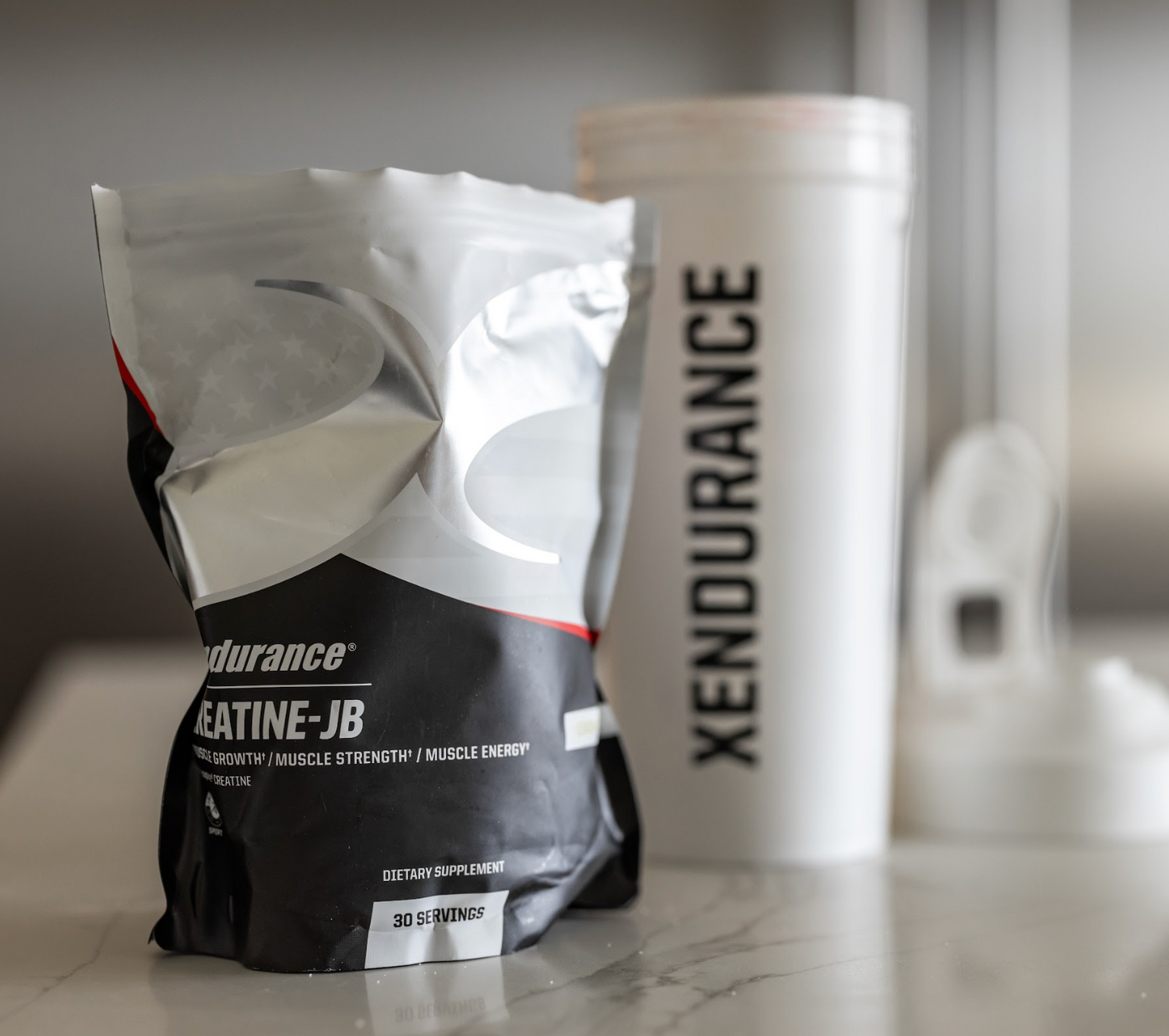
The product label for Xendurance Creatine-JB reflects this reality—timing is listed as flexible, with the emphasis placed on daily consistency rather than a rigid pre- or post-window.
Creatine-JB and the Question Athletes Keep Asking
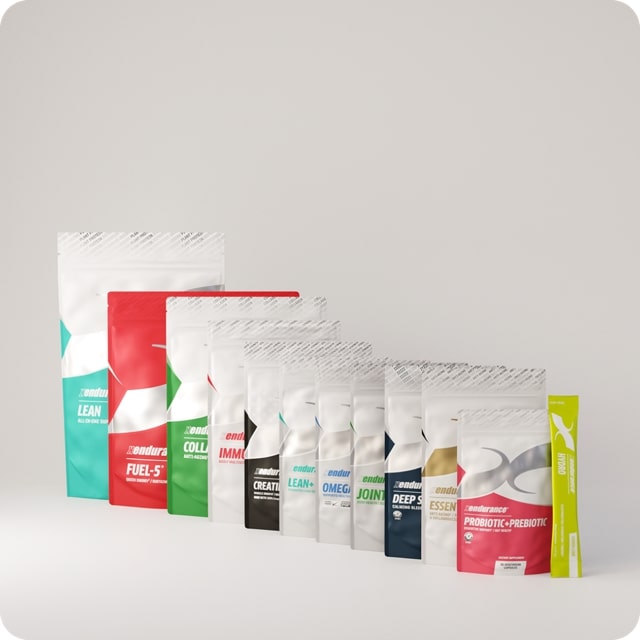
Xendurance Creatine-JB is formulated with Creapure® creatine monohydrate—the highly purified German-sourced monohydrate that is 99.9 % pure—plus lactate, the body’s preferred fuel for high-intensity efforts. Each serving delivers a research-aligned dose of creatine without requiring a loading phase. It is Informed Sport certified, mixes easily, and carries a light lemon-citrus flavor that athletes in CrossFit boxes and HYROX training groups tend to appreciate.
Because timing is one of the top questions customers ask about Creatine-JB, the new study provides a straightforward reply: either before or after training is fine. What matters more is taking it every day—including rest days—so intramuscular stores stay elevated. On especially hard training days, some athletes choose to split the dose, but the core recommendation remains simple consistency.
The lactate component is particularly relevant for hybrid and functional athletes. High-intensity intervals, sled work, wall balls, and repeated power efforts all generate lactate; having extra lactate available may support energy production and recovery in those specific demands. Combined with creatine’s well-documented role in phosphocreatine resynthesis, the formula aligns well with the energy systems taxed by CrossFit WODs and HYROX stations.
5 Practical Takeaways for Anyone Using Creatine
- Consistency beats precision. Saturate your muscles with a daily 3–5 g dose (or the serving size on your product) and keep it going. Rest-day doses still count.
- Train hard and progressively. The study reconfirmed that structured resistance training itself drives measurable improvements in strength and body composition. Creatine is an amplifier, not a substitute.
- Hydrate. Creatine draws water into muscle cells. Extra fluid intake helps comfort and performance.
- Match the tool to the sport. Whether you are chasing a heavier clean in the box, a faster sled push in HYROX, or simply more resilient legs for hybrid training, creatine supports the high-intensity efforts that define those sports.
- Choose quality. Creapure® (creatine monohydrate) has a long safety and purity track record. Third-party testing (Informed Sport) adds another layer of confidence for competitive athletes.
The 2026 Mills et al. study does not diminish creatine’s value; it simply removes unnecessary stress about the perfect clock time. For the vast majority of people lifting weights, doing CrossFit, racing HYROX, or training hybrid style, the evidence-based approach is clear: take a high-quality creatine monohydrate product such as Creatine-JB daily, train consistently with progressive resistance, eat enough protein and calories to support adaptation, and stop worrying about whether the scoop went down five minutes before or five minutes after the first set.
Your muscles care far more about the total weekly stimulus and the steady supply of creatine than about the exact minute the powder hit the glass.
That is the science-backed, athlete-practical answer to the question that keeps appearing in Creatine-JB inquiries. Train hard, stay consistent, and let the data do the rest.

Leave a comment
This site is protected by hCaptcha and the hCaptcha Privacy Policy and Terms of Service apply.