



The Oahu Pentathlon is not a conventional race. It is a 135-mile journey that asks athletes to circumnavigate the island of Oahu in a single continuous effort—roughly two miles of ocean swimming, sixteen miles of running, ten to twelve miles of paddling, a ten-mile sandbag carry around Kaena Point, and nearly one hundred miles of cycling—completed within a hard twenty-four-hour window from sunrise to sunrise. There is no official podium culture. The event organizers emphasize Hawaiian values of Ho’omau (persistence), Malama (care), Kokua (help), Hau’oli (joy), and Aloha over pure speed. Yet for the athletes who take on the Solo Trek, the physical and mental demands remain uncompromising.
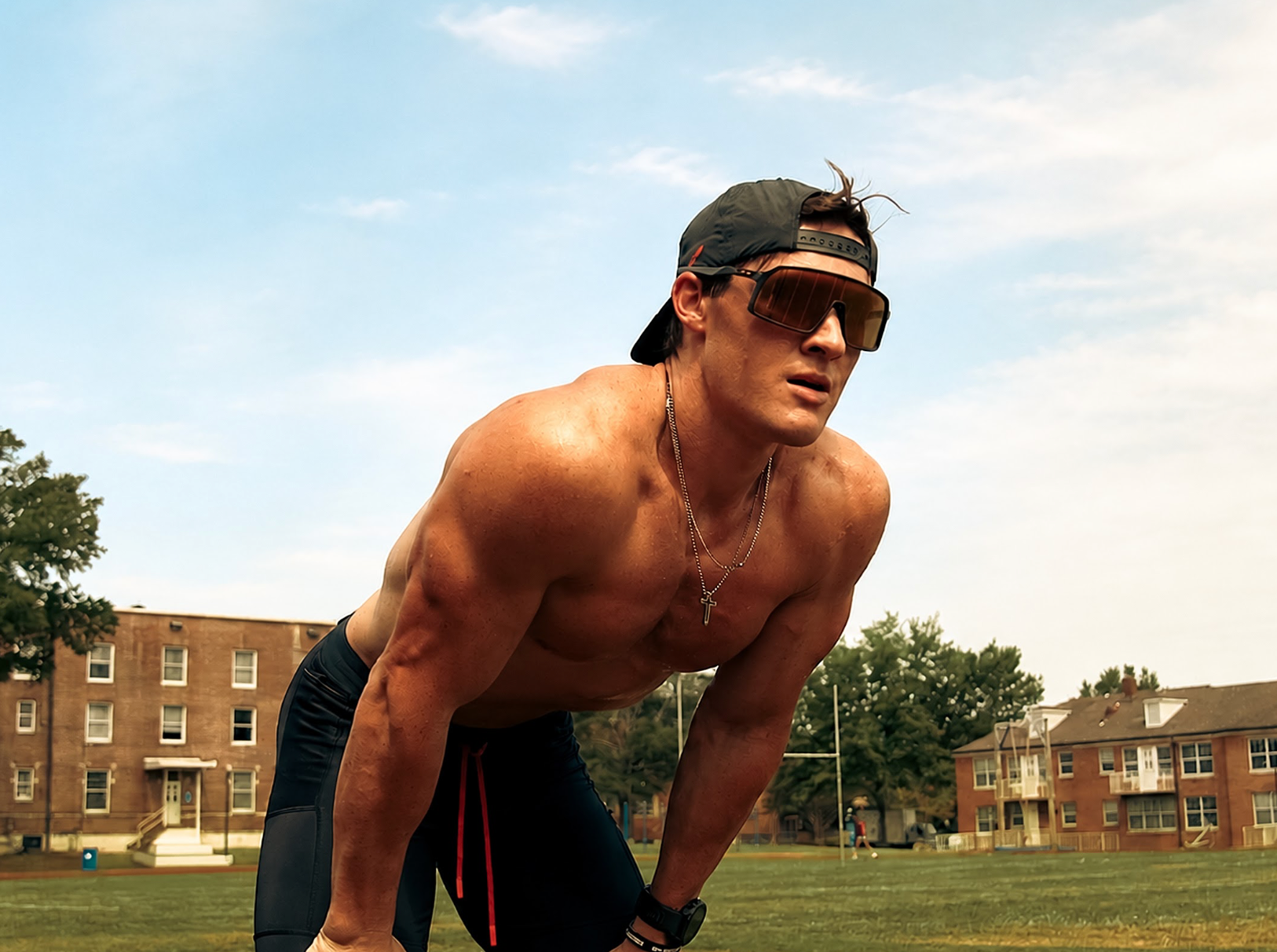
Jake Gibbs, the Maui-based hybrid athlete, coach, and Hyrox competitor, already knew the course. In 2025, he finished the Solo Trek in 17 hours and 35 minutes, placing third among individuals. When he returned for the 2026 edition, the goal was no longer simply to finish. It was to move through the full spectrum of the island’s challenges with the same presence and composure he brings to his coaching and racing. What he encountered tested that intention more severely than any training block.
The swim began at sunrise from the Kailua Boat Ramp. The water was calm enough in the early light, the familiar shallow stretches of Kailua Bay offering the occasional turtle sighting. Then the stings began. The first came as a sharp, electric flash across the forearm. The second followed almost immediately on the opposite side. By the time Jake reached the third and fourth contacts, the pattern was clear: he was swimming through a pocket of jellyfish. The fifth sting landed higher, near the shoulder, as he adjusted his line toward Castles Beach. Five distinct strikes in the opening leg of a twenty-four-hour effort.
Jellyfish stings in Hawaiian waters are not abstract hazards. Box jellyfish and Portuguese man-of-war deliver pain that ranges from intense burning to full-body distraction. The immediate response is chemical and neurological; the longer response is psychological. Pain that arrives early can dominate the mental landscape for hours if an athlete allows it.
Jake’s training in hybrid racing and multi-hour efforts had taught him a simple rule: the body will report every problem, but the mind decides which reports receive full attention.
He kept swimming. He noted the locations of the stings, adjusted his stroke slightly to protect the more sensitive areas, and moved the focus forward to the next buoy and the eventual transition. The burning remained present, but it no longer occupied the center of his awareness.
The run that followed offered no relief from residual discomfort, only a different kind of demand. Sixteen miles of mixed urban and scenic road took him from Castles Beach toward Kualoa Regional Park. The stings continued to pulse with every arm swing. Yet the rhythm of running provided a familiar anchor. Jake has long used cadence and breathing as tools for mental reset. Each kilometer became a small container: notice the sensation, acknowledge it, then return to the next footstrike. By the time he reached the paddle transition, the sharpest edge of the pain had begun to settle into a manageable background signal.
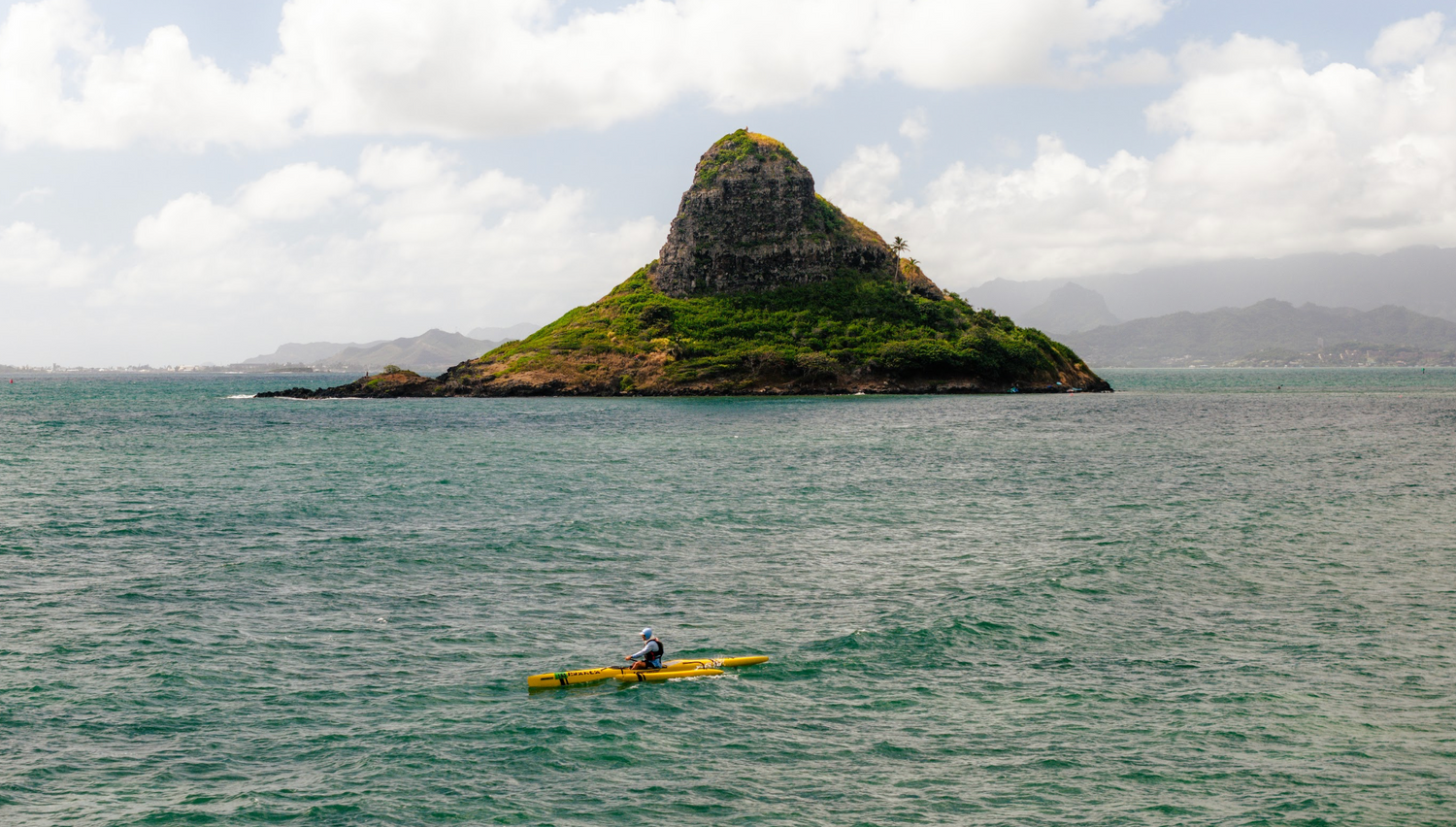
The paddle section—roughly ten to twelve miles from near Chinaman’s Hat northward to Kokololio Beach Park—brought open-water variables of swell and wind. Paddling required continuous upper-body engagement, which reawakened the sting sites. Here the mental work shifted from pure suppression to active reframing. Instead of treating the discomfort as an enemy, Jake treated it as data. The body was still functional. Power transfer through the paddle remained intact. The ocean was doing what oceans do. This distinction—between pain that signals damage and pain that simply exists—proved decisive. He stayed in the kayak or canoe, kept the stroke efficient, and arrived at the bike transition with the first major physical crisis still under control.
Then came the flat tire.
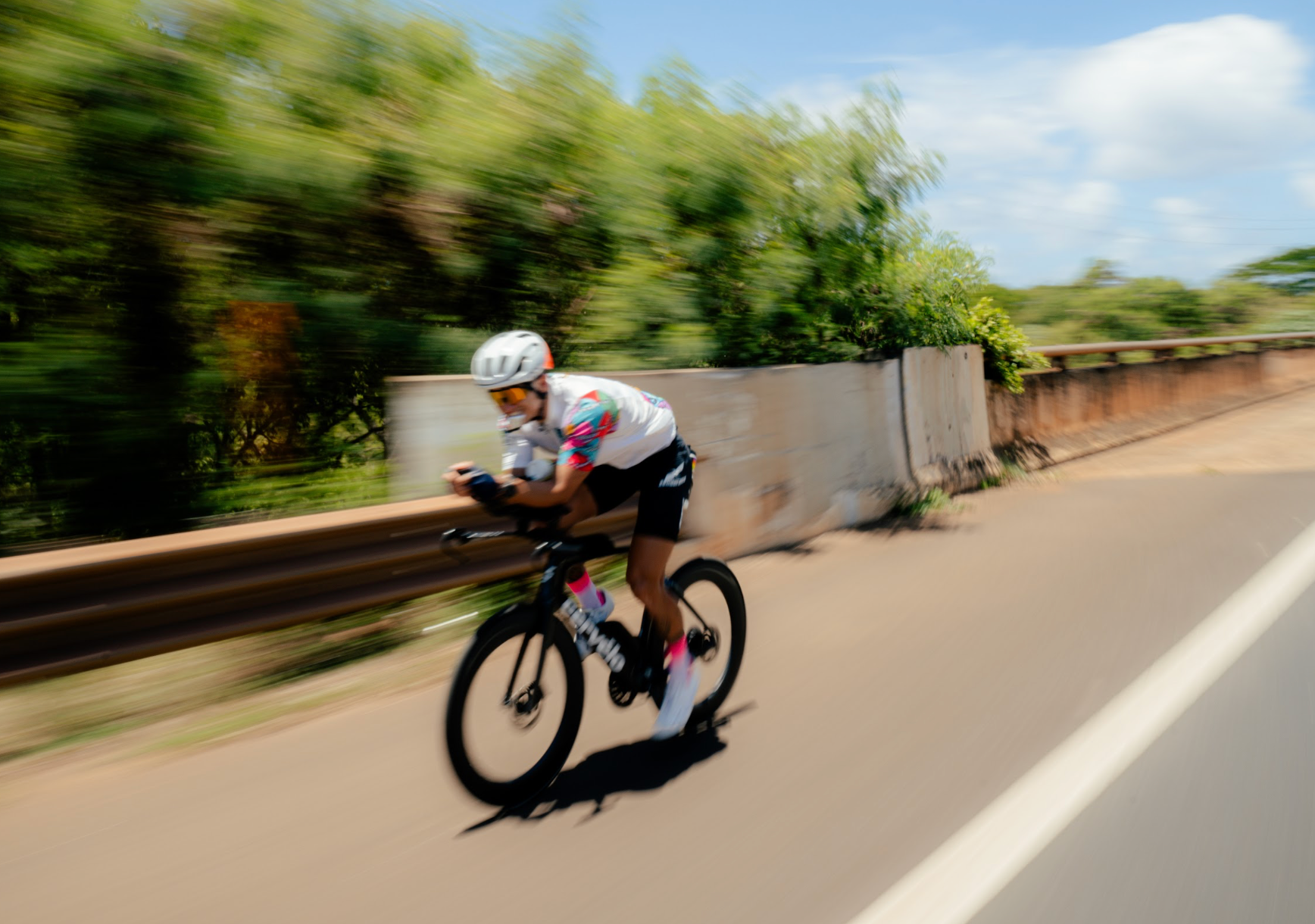
Somewhere on the long bike sections that loop the North Shore and continue around the western side of the island, the unmistakable change in handling arrived. A puncture. In a self-supported or lightly supported ultra format, a flat is never just a mechanical inconvenience. It is a forced stop, a loss of momentum, and a sudden invitation for the mind to catalog every other problem still present: the residual jellyfish stings, the accumulating fatigue, the remaining distance, and the ticking twenty-four-hour clock.
Rather than spending critical time and energy trying to execute a roadside repair under those conditions, Jake made a different decision. He borrowed a friend’s bike and continued. The swap itself required coordination, trust, and the willingness to accept help in the middle of a long solo effort. That choice kept him moving forward instead of letting the mechanical problem become a prolonged mental and physical drain. The interruption still cost time, but it did not cost the rest of the day. He got back on the road, settled into the new bike, and kept the focus on the next section of the course.
The sandbag carry around Kaena Point is often cited by athletes as one of the most mentally demanding segments. Ten miles of carrying weight without straps, across terrain that feels remote and exposed, after already covering substantial distance.
For Jake, the carry arrived with the cumulative effects of the earlier setbacks still present. The jellyfish stings had left residual irritation. The flat had stolen minutes and forced an energy expenditure that could not be fully recovered. Yet this was also the section where the event’s deeper philosophy became practical rather than abstract. Ho’omau is not a motivational slogan when the legs are heavy and the bag is digging into the shoulders. It is a decision repeated with every step: continue, or negotiate with the discomfort for a softer outcome.
Jake continued.
The final bike legs and the return toward the finish closed the loop. By the time he approached the end of the twenty-four-hour window, the story of the day was no longer primarily about the obstacles. It was about the consistent choice to keep the mind oriented toward the next actionable step rather than the full remaining distance or the accumulating list of difficulties. Five jellyfish stings in the opening swim. A flat tire that demanded an unplanned stop and repair. Hours of residual physical noise. And still a completed Solo Trek.
What makes this particular effort instructive is not the presence of adversity—every ultra contains it—but the quality of attention Jake maintained while moving through it. Mental focus in endurance sport is frequently misunderstood as the absence of negative thought. In practice, it is closer to selective engagement. The stings were real. The flat was real. The fatigue was real. None of those facts required the mind to collapse into catastrophizing or self-pity. Each could be registered, addressed at the level of immediate action, and then released from the foreground of attention.
Athletes who train primarily for shorter, higher-intensity efforts sometimes underestimate how different the psychological demands become when the effort stretches across an entire day and night. In a Hyrox or a half-Ironman, pain is often acute and time-limited. In a 135-mile multi-discipline challenge, pain and disruption become environmental conditions. The skill is learning to operate effectively inside those conditions rather than waiting for them to disappear.
Jake’s background across swimming, cycling, running, strength work, and hybrid racing gave him a broad physical base. The decisive factor on this particular day was the ability to keep returning the mind to process: stroke, footstrike, paddle rhythm, tire repair sequence, next section of the carry.
There is also the community dimension that the Oahu Pentathlon deliberately cultivates. Support crews, fellow athletes, volunteers at transitions, and the shared understanding that the event is larger than any single finishing time all create a container that makes sustained effort more sustainable. Jake has spoken in the past about the value of racing near friends who were competing as a team. That relational layer does not remove the sting or reinflate the tire, but it changes the emotional texture of the long hours. Isolation amplifies difficulty. Connection distributes it.
For athletes watching from outside the event, the practical takeaways are transferable. First, early adversity does not determine the outcome of a long effort; the response to that adversity does.
Second, technical competence under stress—whether changing a tire or adjusting stroke mechanics around a sting—is a trainable skill that reduces the mental load of unexpected problems.
Third, the ability to reframe pain as information rather than identity preserves energy that would otherwise be spent in internal resistance.
Fourth, values larger than pure performance (community, persistence, care for the places we move through) can serve as stabilizers when motivation based solely on results begins to erode.
Jake Gibbs is an Xendurance athlete who did not simply endure the Oahu Pentathlon. He moved through a day that included five jellyfish stings in the swim and a flat tire on the bike, and he finished. In an event that deliberately refuses the traditional language of winning and losing, that completion itself stands as the clearest expression of what the challenge asks for: the capacity to keep showing up, section after section, with the mind still available for the work at hand.
The island does not negotiate. The ocean does not soften its conditions for the convenience of the athlete. The clock continues. What remains under the athlete’s control is the quality of attention brought to each successive moment.
On this August day in 2026, Jake Gibbs demonstrated that control under pressure is not the absence of disruption. It is the decision, repeated across 135 miles, to keep the focus where it is most useful.

コメントを書く
このサイトはhCaptchaによって保護されており、hCaptchaプライバシーポリシーおよび利用規約が適用されます。