



Hamstring health is a very popular topic among athletes, coaches, trainers, and sports medicine professionals — and for good reason. In field-based team sports like soccer, rugby, football, and even track sprinting, hamstring injuries account for roughly 10% of all injuries, with an incidence rate of 0.81 per 1,000 hours of exposure. Over a typical 9-month season, about 13% of athletes will experience one, and that number climbs higher in elite professional football, where hamstrings now represent up to 24% of total injuries in recent seasons.
These aren’t minor setbacks. A single strain can sideline an athlete for 2–4 weeks on average, with re-injury rates hovering between 15–30% — often more severe the second time around. In the Premier League alone, data through April 2025 showed 124 hamstring injuries recorded that season, with trends indicating injuries are taking longer to heal despite stable overall numbers. The financial, physical, and mental toll is massive: lost playing time, dropped performance, and heightened career anxiety.
Why the obsession? Hamstrings are the powerhouse of speed, acceleration, deceleration, and explosive movements. They cross two joints (hip and knee), making them vulnerable during the late swing phase of sprinting when they’re lengthening under high load. Poor eccentric strength, previous injury history, age, fatigue, and training imbalances all stack the odds against them. Athletes and coaches know that investing in hamstring health isn’t optional — it’s the difference between staying on the field and watching from the sidelines.
Understanding the Hamstring: Anatomy and Why It Fails
The hamstring group — biceps femoris, semitendinosus, and semimembranosus — runs along the back of the thigh. They extend the hip and flex the knee, acting as brakes during running and stabilizers during cutting. Most strains occur at the muscle-tendon junction, especially in the biceps femoris, during high-speed eccentric contractions.
Risk factors are well-documented: a prior hamstring injury multiplies risk dramatically (odds ratios up to 5x in some studies), while age increases incidence by about 6.4% per additional year of average cohort age. Other contributors include quad-hamstring imbalances, inadequate warm-ups, poor lumbopelvic stability, and high training loads without sufficient recovery.
Prevention: The Foundation of Hamstring Health
The good news? Most hamstring injuries are preventable. The gold-standard intervention is eccentric training — specifically programs that include the Nordic hamstring exercise (NHE). Multiple systematic reviews and meta-analyses involving thousands of athletes show that NHE-inclusive programs can reduce hamstring injury rates by up to 51%.
How to do the Nordic Hamstring Exercise:
- Kneel with feet anchored (partner or strap).
- Slowly lower your torso forward while keeping hips extended, resisting with your hamstrings.
- Catch yourself with your hands when you can’t control the descent, then push back up.
- Start with 2–3 sets of 5–8 reps, 2–3 times per week. Progress volume gradually.
Combine NHE with:
- Sprint-specific training: High-velocity running drills build resilience in the exact movements that cause injury.
- Load management: Monitor acute: chronic workload ratios via GPS or training logs.
- Mobility and stability work: Dynamic warm-ups, glute activation, and single-leg balance drills.
- Periodization: Heavy eccentric focus in off-season, maintenance during competition.
Teams using FIFA 11+ or similar protocols that emphasize eccentrics see 30–50% overall injury reductions, with hamstrings benefiting most.
Rehabilitation: From Pain to Performance
If injury strikes, rehab must be progressive and criteria-based — not time-based. Early phase (0–7 days): protection, gentle mobility, and isometric holds. Middle phase: eccentric loading and strength rebuilding. Late phase: high-speed running, plyometrics, and sport-specific drills.
Key return-to-play (RTP) criteria include:
- Full pain-free range of motion (90%+ symmetry).
- Strength symmetry (≤10% deficit in knee flexion torque).
- Pain-free max-effort isometrics and sport movements at competition speed.
- Psychological readiness (confidence in the leg).
Studies emphasize that rushing RTP leads to the high recurrence rates we see. Functional testing — single-leg hop, Nordic curl endurance, and sprint mechanics analysis — is essential.
The Role of Supplements in Hamstring Health
While training is king, targeted supplements can support tendon resilience, reduce inflammation, preserve muscle during recovery, and accelerate return-to-play. They’re not replacements for smart programming but valuable adjuncts when used strategically.
- Hydrolyzed Collagen Peptides (10–15 g/day + 250–500 mg Vitamin C)
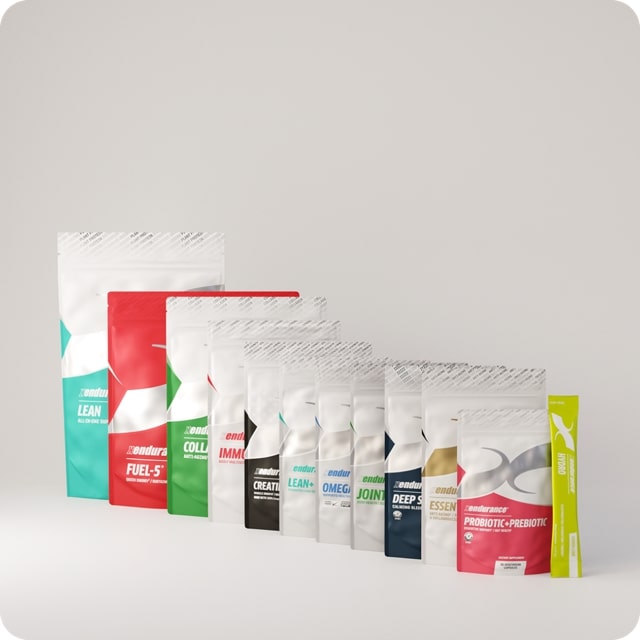
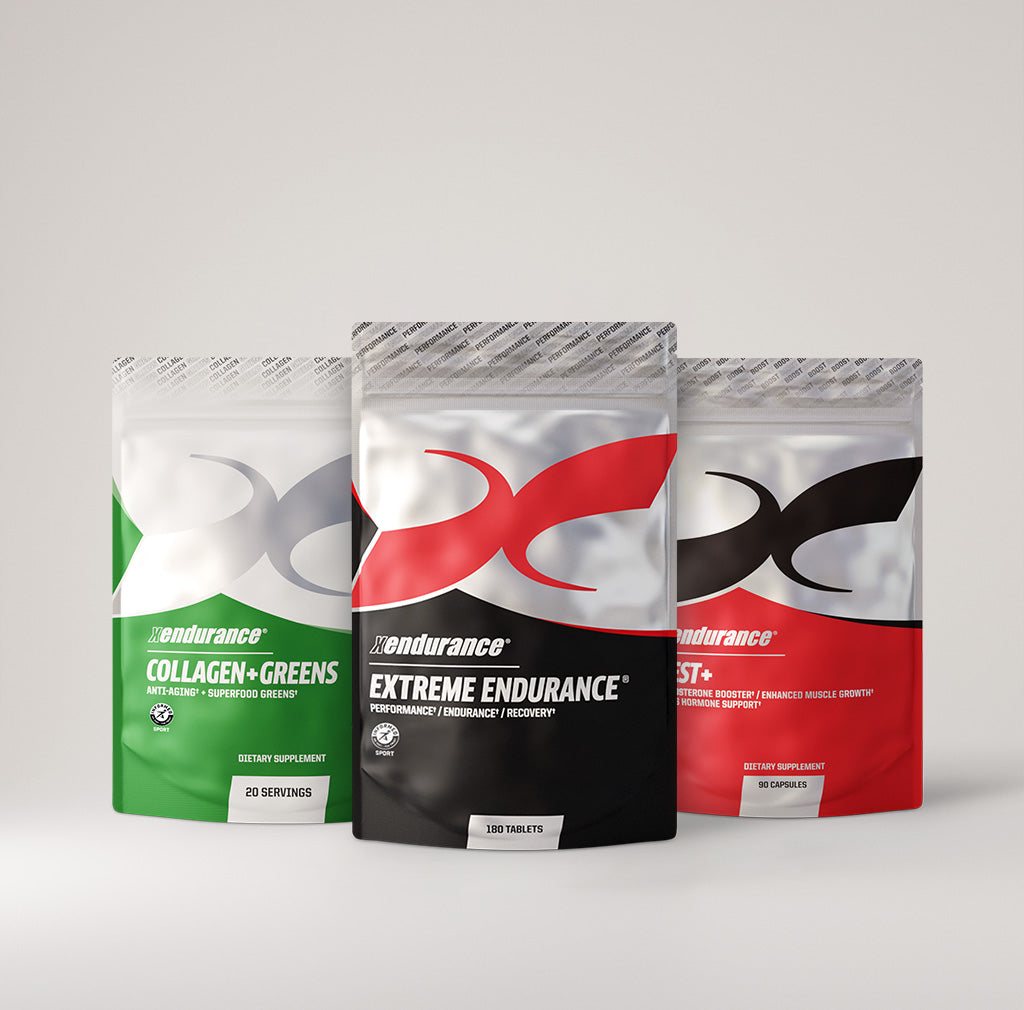
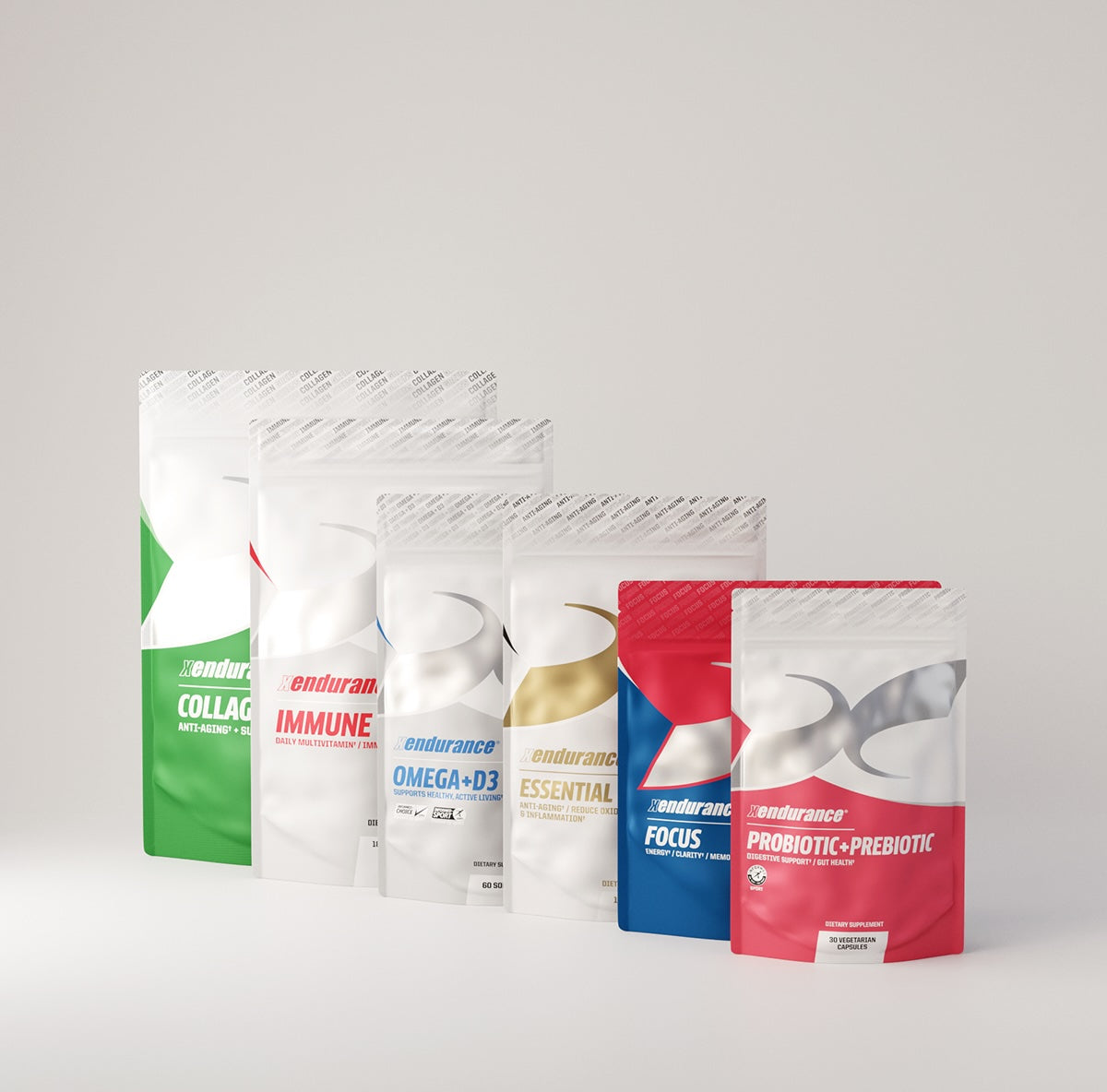
This is the standout for connective tissue. Collagen is the primary protein in tendons and the muscle-tendon junction — exactly where most hamstring strains occur. Research shows that 5–15 g daily, taken 30–60 minutes before eccentric training, stimulates collagen synthesis, improves tendon strength and flexibility, and aids recovery from soft-tissue injuries. In athletes with tendon issues, collagen + vitamin C has led to faster pain reduction and better function. Collagen+Greens, formulated by Xendurance, has 16 gms of Grass Fed Collagen Peptides per serving, Type I & III, used by many medical professionals to combat tendon issues, pre and post surgery.
- Omega-3 Fatty Acids (2–4 g EPA + DHA daily)
These potent anti-inflammatories from fish oil help blunt excessive post-training or post-injury inflammation without blocking beneficial adaptations. They also reduce muscle soreness and may preserve muscle mass during reduced activity periods. Ideal for
in-season athletes managing cumulative hamstring stress. Xendurance’s Omega+D3 uses the most bioavailable omegas, triglycerides, with 4,000 IU of vitamin D. Omega+D3 is a staple in every CrossFit and Hyrox competitor’s training bags.
- Creatine Monohydrate (3–5 g/day)
Proven to maintain or restore muscle strength and mass during immobilization or rehab. It supports faster strength recovery and provides general performance benefits for power-based sports. Many athletes notice a quicker return of eccentric hamstring capacity when using creatine consistently. Creatine-JB, formulated by Xendurance, uses 5G of Creapure creatine, the most bioavailable creatine, for maximum benefits.
Other supportive options include adequate protein (2–2.5 g/kg body weight during injury), tart cherry extract, found in Blood Fuel for soreness, and vitamin D if levels are low. Always prioritize whole foods first and consult a sports dietitian or physician — especially for tested athletes.
Practical Training Tips for Athletes and Coaches
- Pre-hab routine: 10-minute dynamic warm-up + 2–3 sets NHE + single-leg Romanian deadlifts.
- In-season maintenance: 1–2 NHE sessions weekly at reduced volume.
- Monitoring: Use apps or force plates to track eccentric strength trends.
- Recovery stack: Sleep 8+ hours, hydrate, and pair collagen with training sessions.
- Youth vs. pros: Younger athletes need more focus on technique; elites emphasize load monitoring.
Integrating these habits can dramatically lower injury risk while boosting speed and power output.
Make Hamstring Health Non-Negotiable
Hamstring health isn’t a trend — it’s a performance imperative. With injury rates stubbornly high and re-injury risks looming, athletes who treat their hamstrings like the high-performance assets they are gain a massive edge. Eccentric training, smart programming, criteria-based rehab, and evidence-backed supplements (collagen peptides leading the charge) form a complete system that keeps you healthy, fast, and competitive.
Whether you’re a weekend warrior, college athlete, or pro, start today: assess your current hamstring strength, add NHE to your routine, and consider a simple supplement protocol. Don’t be the one grabbing your hamstring before you cross the finish line or take that crucial shot on goal.


Leave a comment
This site is protected by hCaptcha and the hCaptcha Privacy Policy and Terms of Service apply.