




Most runners meet “nitric oxide” in a pre-workout aisle, next to caffeine, beta-alanine tingles, and a label that promises to turn you on. That framing is wrong for distance running. Nitric oxide (NO) is not a spark plug. It is a delivery system: a short-lived signaling gas that tells blood vessels to relax, so oxygen, glucose, and fatty acids can actually reach working muscle.
That distinction matters if you race an 800-meter kick, a muddy 8K, or a 100-mile night. Stimulants change how awake you feel. Nitric oxide changes how well blood moves. One is a mood. The other is plumbing.
What nitric oxide actually does on the run
NO is produced in the endothelium (the inner lining of blood vessels) from L-arginine via nitric oxide synthase, and also from dietary nitrate through the nitrate–nitrite–NO pathway. Once released, it widens arterioles, improves the matching of blood flow to working fibers, and can lower the oxygen cost of a given pace.
That last point is why beetroot and citrulline keep showing up in endurance research. The goal is not to feel “amped.” The goal is to do the same work with a little less strain—or more work before the same strain arrives.
A 2025 crossover trial in middle-aged and older adults with type 2 diabetes found that 6 grams of citrulline per day improved microvascular endothelial function, muscle tissue oxygen responses during reactive hyperemia, plasma arginine, and calf strength versus placebo. Those subjects were not chasing a track PR. The study still matters for runners because it isolates the delivery story: better small-vessel function, better muscle oxygenation signals, better force.
A separate acute trial in trained men stacked beetroot juice with L-arginine and L-citrulline before exhaustive exercise. Serum nitric oxide metabolites rose sharply versus placebo and stayed elevated after the effort. Time to exhaustion did not change in that protocol, but perceived fatigue drifted down (Journal of Sport and Exercise Physiology). That is a useful, honest result. NO is not magic for every test. It is reliable at moving the blood-flow needle.
Track and field: seconds live in the last 150 meters
On the track, races are short enough that people assume only phosphocreatine and buffering matter. Blood flow still decides how quickly you clear metabolites between repeats and how much oxygen you can extract when the last 150 meters go anaerobic-looking.
Middle-distance runners live in the gray zone: 800 through 5,000 meters, where aerobic delivery and anaerobic tolerance trade blows. If vessels open more readily, muscle sees more oxygen at the same cardiac output. That can show up as a slightly easier 400-meter split in a workout, or as less decay from rep five to rep eight.
Field athletes are not exempt. A jumper’s or thrower’s session is a series of high-output efforts with incomplete recovery. Microvascular function is part of how quickly tissue re-oxygenates between attempts. The diabetes-and-citrulline data above is not a long-jump paper, but the physiology—endothelial function plus muscle oxygenation—is the same system those sessions tax.
Practical track use of a nitrate-forward product is usually 2–3 hours pre-session for beetroot, or a daily citrulline habit if that is the chosen precursor. It is not a “sip it in the blocks” stimulant. If you feel a buzz, something else is in the scoop.
Cross country: uneven ground, uneven blood flow
Cross country is where delivery becomes obvious. Hills, soft ground, surges off the line, and pack running all spike local demand while cardiac output is already high. The athlete who can keep blood moving through working calves on a muddy climb does not need to “try harder.” They need vessels that cooperate.
Team-sport and intermittent-endurance literature is a closer cousin to XC than a flat 10K time trial. High-intensity intermittent work depends on repeated reperfusion. When NO signaling is supported, the interesting effect is often not a single all-out test. It is the second and third surge that hurt less than they should.
That is also why mouthwash warnings exist around beetroot. Oral bacteria convert nitrate to nitrite; antiseptic mouthwash can blunt the pathway. Xendurance notes this directly in its Blood Fuel education: the nitrate in beetroot powder relies on those oral bacteria before NO ever reaches working muscle. For an XC athlete who rinses with strong antiseptic before a race-morning scoop, that is not trivia. It is the mechanism.
Cross country also stacks inflammation and oxidative stress on top of the delivery problem—repeated hard efforts on tired legs, cold air, travel. That is why a nitrate product that also carries polyphenols is a better match for this sport than a single-molecule “pump” capsule.
Ultra-distance: the quiet hours decide the loud ones
Ultra running is the cleanest argument against the stimulant frame. Nobody wants another caffeine spike at mile 62 if the gut is already negotiating. They want blood still arriving at the working muscle, the gut, and the brain after 8, 12, or 20 hours.
In long events, two delivery problems show up at once. First, cardiac drift and progressive vasodilation can leave some tissues underserved. Second, oxidative stress and inflammation make the endothelium itself less cooperative. Supporting NO is not about feeling “on.” It is about keeping the hose from kinking while the hours accumulate.
Beetroot research in endurance sport has been most consistent when the question is economy and time-trial performance over sustained efforts, not a 10-second burst. Brand-side summaries of nitrate work often cite reductions on the order of a few percent in time-trial settings. Xendurance positions Blood Fuel around increased muscle blood flow during exercise and time-trial improvements up to about 3%. Treat those as directional, not a promise that every 50-miler gets 3% cheaper. The underlying idea is still sound: a small economy gain compounds when the race is measured in hours.
Ultras also punish recovery between training blocks. Tart cherry, pomegranate, and blueberry polyphenols show up in recovery and antioxidant research for a reason. They are not nitric oxide. They are the other half of staying able to absorb the next session.
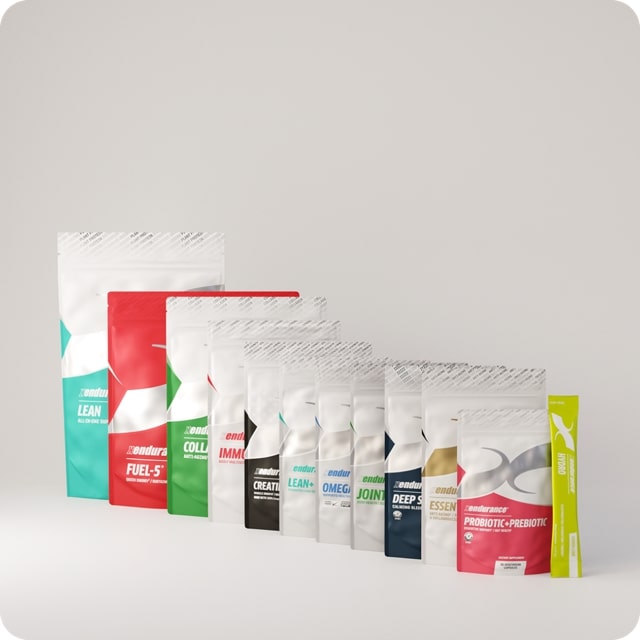
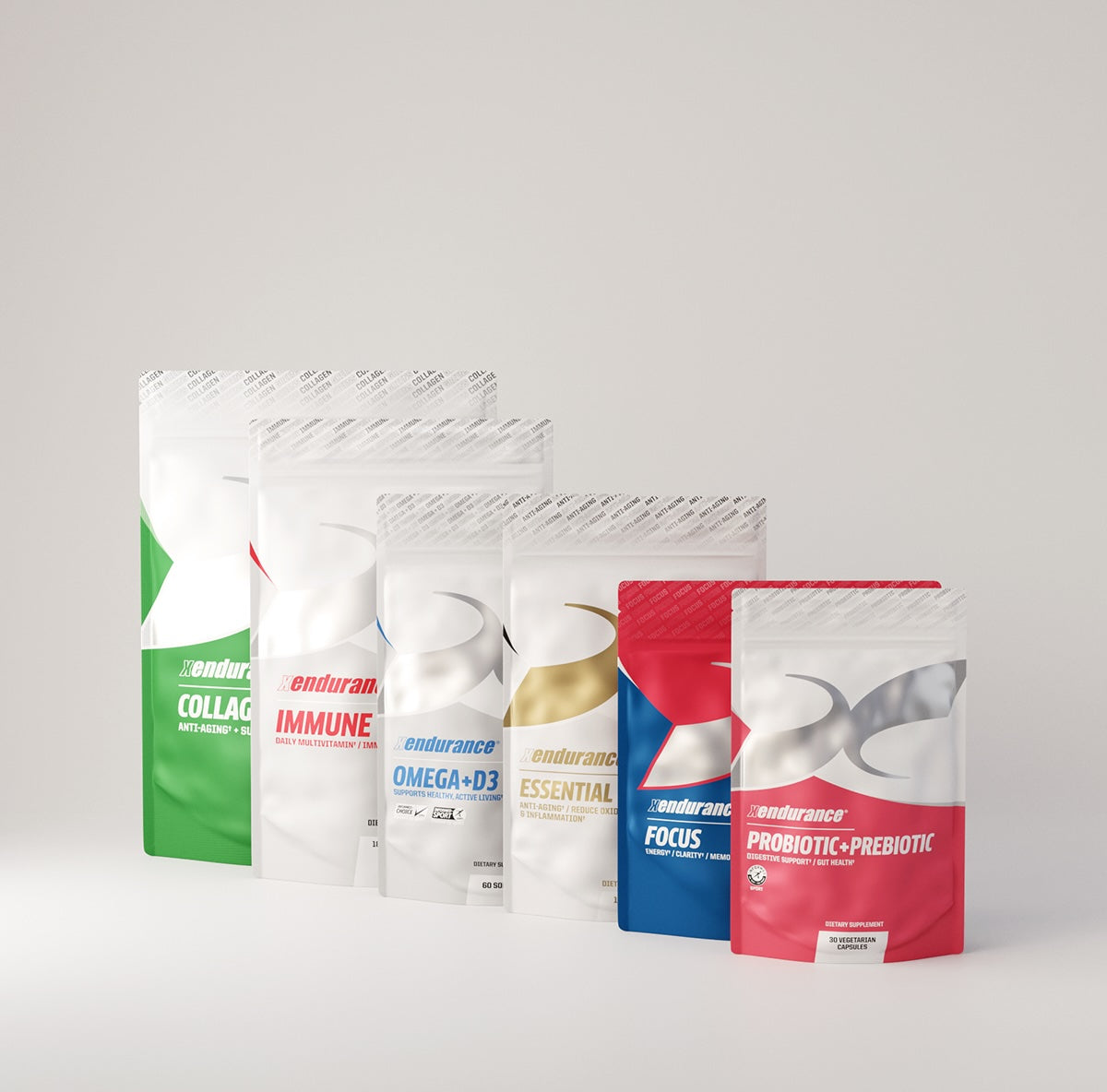
Blood Fuel was built as that stack: 5,000 mg organic beetroot powder for the nitrate–NO pathway, plus tart cherry, pomegranate, blueberry, and lemon powder, with no caffeine. That is a runner’s formula, not a bodybuilding pre-workout.
U.S. Olympic marathoner Jess McClain put the use-case in athlete language after the January 2026 launch at HYROX Phoenix: she had used beetroot before sessions and races for the oxygen-efficiency effect, and wanted the product earlier (endurance.biz). Notice what she did not say. She did not say it made her feel wired. She said nitric oxide surge for endurance and oxygen efficiency.
Stimulant versus signal: how to tell them apart
If a product raises heart rate at rest, sharpens mood, or wrecks sleep when taken after 3 p.m., you are dealing with a stimulant or a stimulant stack. Caffeine has a place in racing. It is not nitric oxide.
If a product is silent in the first 20 minutes, then the third hill or the sixth 400 feels less expensive than it should, you are closer to a delivery effect. That is how nitrate and citrulline usually present: no fireworks, slightly better matching of supply to demand.
A 2026 meta-analysis of citrulline malate on exercise performance found only small, context-dependent effects and low certainty overall. That paper is worth citing because it keeps the conversation honest. NO support is not a guaranteed podium. It is a vascular input. Training, heat, sodium, carbohydrate, and sleep still dwarf it. The right use is as infrastructure, not as a substitute for fitness.
Resistance-trained men taking L-citrulline or citrulline malate for six weeks did improve upper-body muscular endurance and post-exercise NO metabolites versus placebo, with no clear winner between forms (Journal of the International Society of Sports Nutrition, 2025). For runners, read that as: the amino acid can raise the NO signal; the race still has to be trained.
Where Blood Fuel sits in a runner’s week
Blood Fuel is Informed Sport certified and contains no caffeine, which is the first filter for high-school XC programs, collegiate track, and professional marathon teams that cannot gamble on contamination or late-day stimulation.
A simple way to use it:
- Track intervals / XC race day: mix a serving 2–3 hours before the first hard effort. Skip antiseptic mouthwash that morning.
- Marathon and ultra build: daily or near-daily use on key aerobic days, not only on race morning. Endothelium is a use-it system.
- Stacking: many athletes mix it with a carbohydrate drink such as Fuel-5 when the session needs both oxygen delivery and substrate. Blood Fuel is not a carb source. It is the blood-flow layer. Fuel-5 is the fuel layer. Extreme Endurance, if used, is the mineral/acid-base layer. They are not interchangeable.
None of that requires a tingle. If you need to feel something to believe it is working, nitric oxide was never the tool you were looking for.
The runner’s takeaway
Track athletes need delivery for repeatability. Cross country athletes need delivery under uneven load. Ultra athletes need delivery that still works when caffeine has already been spent, and the gut is bargaining.
Nitric oxide is the molecule that makes those sentences physiological instead of motivational. Beetroot nitrate and citrulline are two on-ramps onto the same highway. Polyphenols help the highway survive the mileage.
Use them as plumbing. Leave the spark plugs for race-week coffee. The quiet work—wider vessels, better oxygen matching, less expensive pace—is the work that shows up in the last 200 meters, the last hill, and the last hour, when nobody is thinking about the pre-workout aisle.


Leave a comment
This site is protected by hCaptcha and the hCaptcha Privacy Policy and Terms of Service apply.