



You can nail the long run, hit every fuel session, and still leave performance on the table if sleep is the missing set. Early alarms, late strength blocks, travel, kids, scrolling, race-week nerves—endurance athletes under-sleep for boring reasons. The practical question is not “is sleep good?” It is whether sleep loss actually hurts endurance performance, and whether a nap, extra sleep, or a better wind-down routine can help you bounce back.
The short answer from recent reviews is yes, sleep loss costs you, especially on longer efforts. A nap can help some markers after a decent night. Extra sleep over weeks can move real performance numbers when you start from habitual short sleep. No capsule replaces hours in bed. A sleep formula can still be a useful tool when the problem is falling asleep, not refusing to get in bed.
What the research actually shows
A 2023 meta-analysis of 31 studies (478 people) found sleep deprivation had a moderate negative effect on endurance performance, with a pooled standardized mean difference of about −0.52. Sessions longer than 30 minutes were hit harder than shorter ones. Training status did not erase the effect.
Across exercise types, acute sleep loss cut performance by roughly 7–8% on average. Endurance tasks were among those affected. Late-night restriction and full deprivation hurt more consistently than going to bed late and waking on schedule. Afternoon testing looked worse than morning testing after a bad night.
In athletes specifically, acute sleep deprivation impaired overall sporting performance with an effect size around −0.56. Cutting sleep at the end of the night was especially costly. Aerobic endurance was among the qualities reduced. Perceived exertion also climbs when you are under-slept; the same wattage or pace often feels harder.
Expert consensus still matters as a tone check. Many elite athletes habitually sleep under seven hours. A full sleepless night clearly hurts. One to three nights of partial restriction—the real-world pattern—still deserves caution even where the data are thinner. Sleep sits in a wider athlete-health frame: physical and cognitive performance, recovery, injury-risk context, and mental health. It is not a soft lifestyle footnote.
What “sleep loss” means in the lab
Lab papers use a few different insults, and they do not all cost the same.
Total deprivation is staying up all night, or close to it. Early restriction is going to bed late, then waking on schedule. Late restriction is going to bed on time, then waking early and cutting the end of the night.
Deprivation and late restriction produced consistent performance drops. Early restriction was less reliably damaging. One analysis reported about a 0.4% performance decrease for every additional hour awake before the test under deprivation and late-restriction patterns.
That maps to familiar life: 4:30 a.m. alarms after a normal bedtime, red-eye flights, or race-week insomnia that chops morning sleep. The athlete-focused work similarly flagged partial sleep loss at the end of the night as especially harmful. If you have to lose time, protect the last third of the night more fiercely than the first.
How hard it hits endurance
The endurance-specific question is the one that matters for long runs, long rides, and HYROX-style engines.
Sleep deprivation reduced endurance performance with a moderate pooled effect. Walking, running, and cycling all showed it. It showed up whether the test was a time trial or an open-ended effort. The duration split is the coaching takeaway: longer efforts pay a bigger tax. A 20-minute VO2 set is not the same problem as a 90- to 180-minute session.
That is why a “fine” short workout after a bad night can fool you. The damage often shows later, when the brain’s willingness to keep producing output starts to slip, and every split feels heavier than the numbers say it should.
One full sleepless night is the cleanest lab insult and the clearest impairment. Partial restriction over a few nights is still an evidence gap coaches should not ignore, because that is what most athletes actually do during work weeks, travel, and build phases.
Morning versus afternoon after a bad night
Timing matters more than most plans admit.
Pooled data found afternoon performance after sleep loss was consistently worse, while morning tasks were largely spared. Athlete-focused analysis reported a smaller morning effect (about −0.30) than afternoon (about −1.11) after acute sleep deprivation.
If last night was a disaster and the key interval set cannot move, do it earlier. Save the afternoon for easy aerobic work, technique, or rest. That is not superstition. It is matching the session to the window where the research says the tax is smaller.
Can a nap fix it?
Sometimes. Partly. Not for every metric.
A 2024 meta-analysis looked at daytime naps after a normal night of seven to nine hours. Napping improved highest and total distance and reduced the fatigue index on the 5-meter shuttle run. Muscle force showed little clear effect. Sprint, Wingate, jump, repeated-sprint, and endurance outcomes were mixed or too thinly studied for firm conclusions.
Treat a nap as a tool, not a free pass. A short nap after a decent night can help afternoon quality. Keep it early enough that it does not wreck night sleep. If you are deeply sleep-restricted, a nap is damage control. It is not a substitute for fixing bedtime.
Practical nap rules that fit the evidence: 20–30 minutes if you need to stay sharp, up to about 90 minutes if you can afford a full cycle and will not then lie awake at 11 p.m. Caffeine-then-nap can work for some people before a key afternoon session, but it is a tactic, not a lifestyle.
What about sleeping more?
The cleanest “more sleep helps” study is still the Stanford basketball work. Players got several weeks of sleep extension with a goal of 10 hours in bed. Objective sleep rose by roughly 111 minutes. Timed sprints got faster. Free-throw and three-point accuracy each rose about nine percentage points. Reaction time improved. Mood and fatigue scores got better.
That is basketball, not a marathon. It is still a clean demonstration that habitual short sleepers can unlock measurable output by extending sleep opportunity. Endurance athletes who chronically sit at six hours should treat a two- to three-week “sleep camp” like a training block: earlier bedtime, darker room, consistent wake, phones out of reach.
Banking sleep before race week is the same idea with a deadline. Travel, nerves, and strange beds are coming. You cannot store sleep like glycogen, but you can enter the week less indebted.
Where a sleep supplement fits
Supplements and recovery products do not replace sleep. Fuel and buffering support training stress. They do not undo hours awake.
What they can do is help the part of the problem many athletes actually have: a wired nervous system at 10:30 p.m. after late training, screens, caffeine that lasted too long, or race-week rumination. If you cannot initiate sleep, you never get the hours the meta-analyses are talking about.
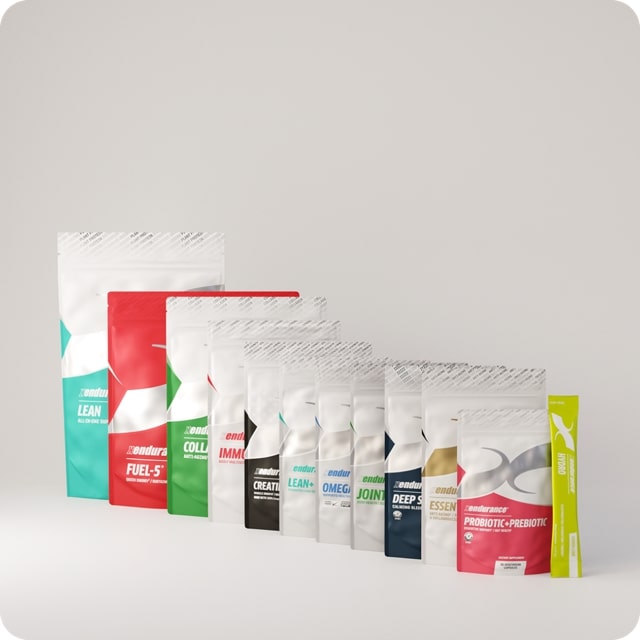
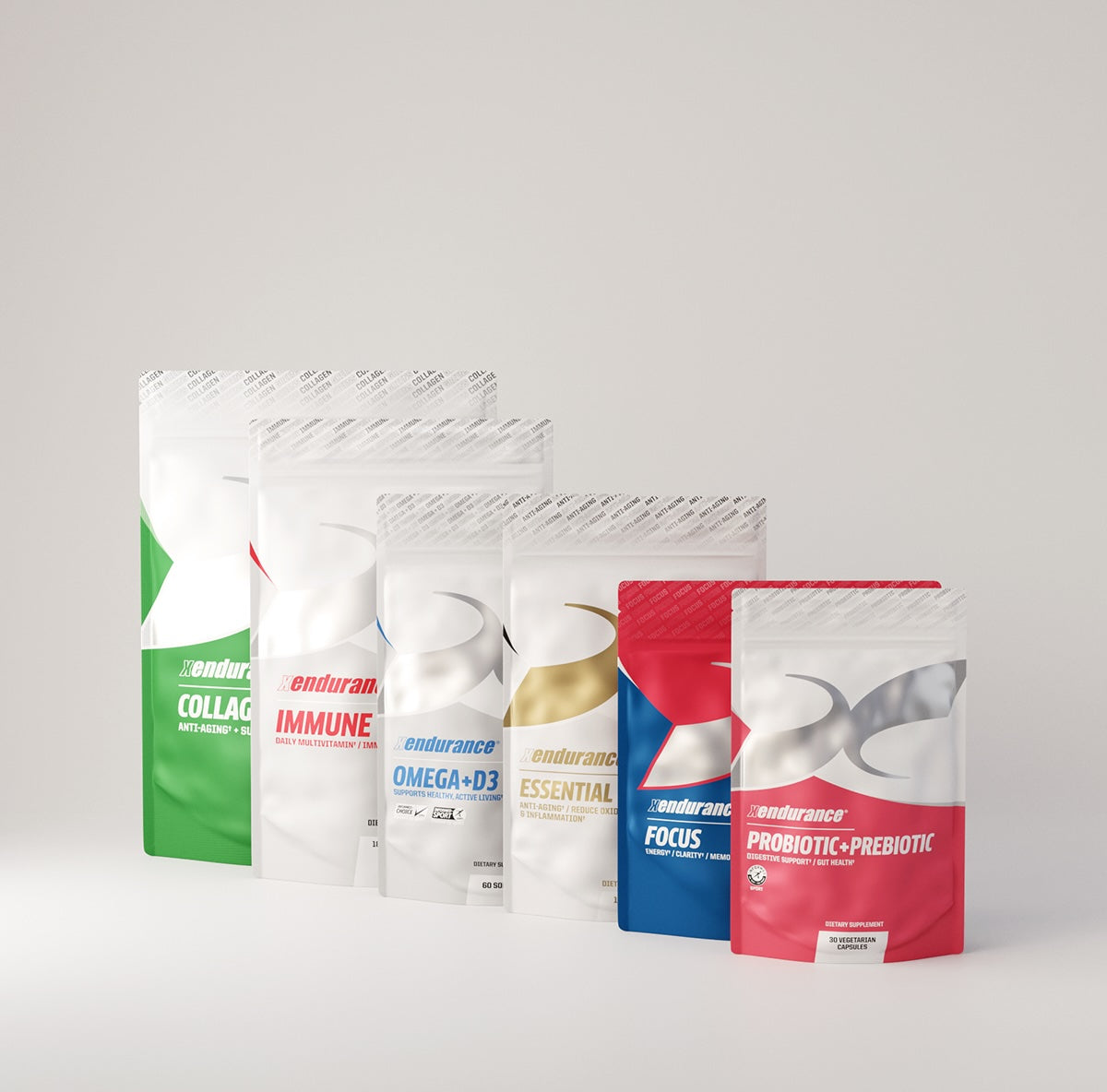
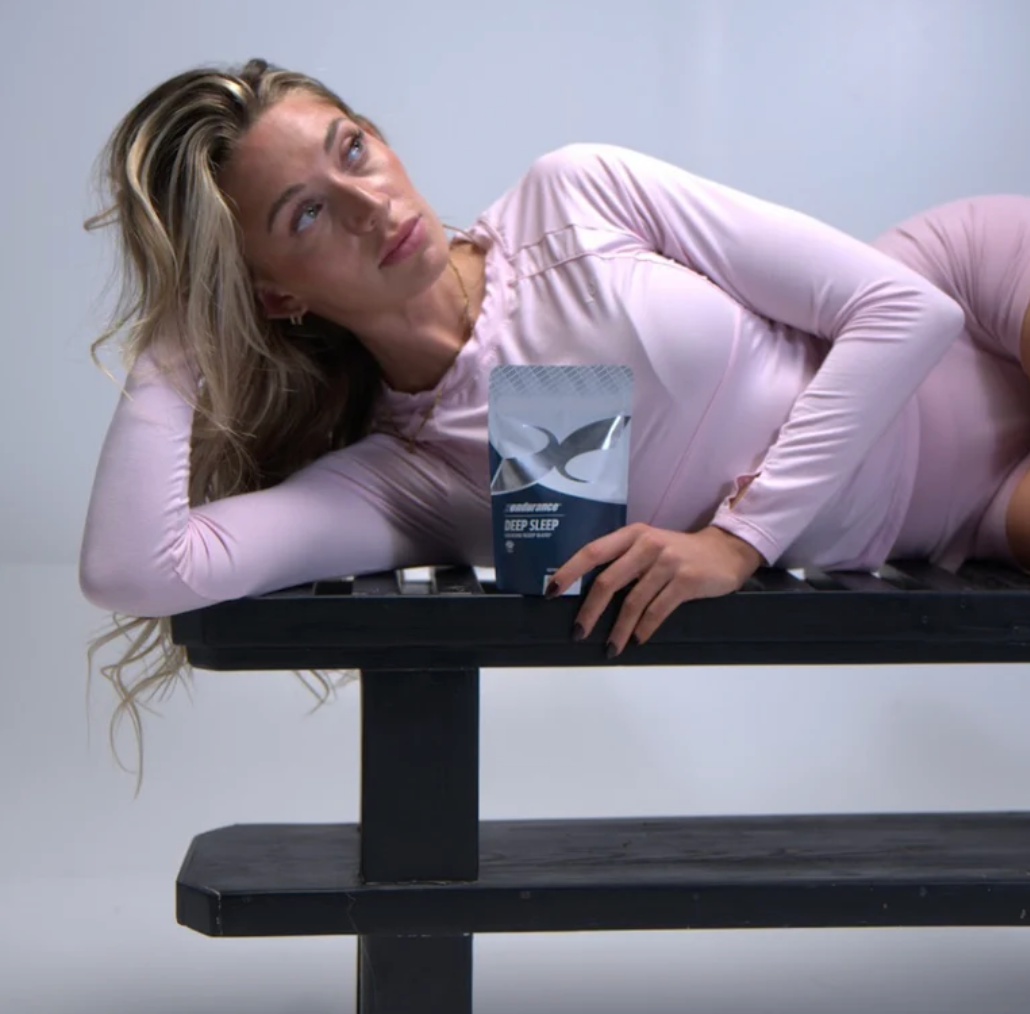
Xendurance Deep Sleep is one option athletes use in that wind-down slot. The formula pairs a modest 2 mg of melatonin with a blend of valerian root, GABA, tryptophan, and 5-HTP. The brand’s positioning is straightforward: melatonin helps the body prepare for sleep, valerian is a traditional relaxation herb, and GABA, tryptophan, and 5-HTP form a calming, serotonin-support stack. Suggested use is two vegan capsules before bedtime.
Use it the way the research would suggest using any sleep aid: as support for a plan, not as the plan. Protect the end of the night first. Dim lights. Cut late caffeine. Keep the room cool and dark. Then, if falling asleep is still the bottleneck, a low-dose melatonin blend is a more athlete-shaped tool than “just push through” or a heavy sedative that leaves you foggy for the morning set. Deep Sleep is marketed around restful sleep without next-day grogginess; individual response still varies, and this is not a claim that the product itself improves time-trial power.
Do not stack multiple melatonin products. Do not treat a capsule as license to keep the 11 p.m. scroll. If you have persistent insomnia, loud snoring, gasping, or daytime collapse, you need a clinician, not another bottle or pouch.
What this means for your week
Protect the end of the night. Late restriction is the pattern the reviews keep flagging.
After a bad night, prefer morning key work when you can. Long sessions pay the bigger tax, so expect more damage on 90- to 180-minute efforts than on short VO2 repeats.
Nap with intent, especially after a normal night when you need afternoon quality.
Bank sleep before race week when travel or nerves are coming.
If sleep onset is the leak, tighten hygiene and consider a simple nighttime formula such as Xendurance Deep Sleep as one support option—not a substitute for the hours.
Honest limits
Many lab studies use young, mostly male samples. Female-specific and masters-endurance data are thinner. Partial restriction for a few nights is still less mapped than total deprivation. Nap benefits depend on duration, timing, and prior sleep. Supplement studies and product marketing are not the same thing as endurance time-trial evidence.
This is not medical advice. Persistent insomnia, apnea symptoms, or daytime collapse need a clinician.
What to Do Next
Sleep loss does hurt endurance performance—moderately on average, more when the session runs long, and more when you cut the end of the night or race hard in the afternoon after deprivation. A nap can help some markers after a normal night. Multi-week sleep extension can improve measurable outputs when you start from habitual short sleep. Treat sleep like intervals: plan it, protect it, and stop pretending caffeine plus grit is the same adaptation. If you need help turning the lights out, a targeted formula can support the routine. It still cannot do the sleeping for you.
Sources
Lopes TR, Pereira HM, Bittencourt LRA, Silva BM. How much does sleep deprivation impair endurance performance? A systematic review and meta-analysis. Eur J Sport Sci. 2023. PMID: 36472094.
Craven J, McCartney D, Desbrow B, et al. Effects of Acute Sleep Loss on Physical Performance: A Systematic and Meta-Analytical Review. Sports Med. 2022. PMID: 35708888. PMC: PMC9584849.
Gong M, Sun M, Sun Y, Jin L, Ye S. Effects of Acute Sleep Deprivation on Sporting Performance in Athletes: A Comprehensive Systematic Review and Meta-Analysis. Nat Sci Sleep. 2024. PMID: 39006249. PMC: PMC11246080.
Walsh NP, Halson SL, Sargent C, et al. Sleep and the athlete: narrative review and 2021 expert consensus recommendations. Br J Sports Med. 2021. PMID: 33144349.
Charest J, Grandner MA. Sleep and Athletic Performance: Impacts on Physical Performance, Mental Performance, Injury Risk and Recovery, and Mental Health. Sleep Med Clin. 2020. PMID: 32005349. PMC: PMC9960533.
Boukhris O, Trabelsi K, Ammar A, et al. The Impact of Daytime Napping Following Normal Night-Time Sleep on Physical Performance: A Systematic Review, Meta-analysis and Meta-regression. Sports Med. 2024. PMID: 37700141. PMC: PMC10933197.
Mah CD, Mah KE, Kezirian EJ, Dement WC. The effects of sleep extension on the athletic performance of collegiate basketball players. Sleep. 2011. PMID: 21731144. PMC: PMC3119836.
Xendurance. Deep Sleep product page. https://xendurance.com/products/deep-sleep

Leave a comment
This site is protected by hCaptcha and the hCaptcha Privacy Policy and Terms of Service apply.