



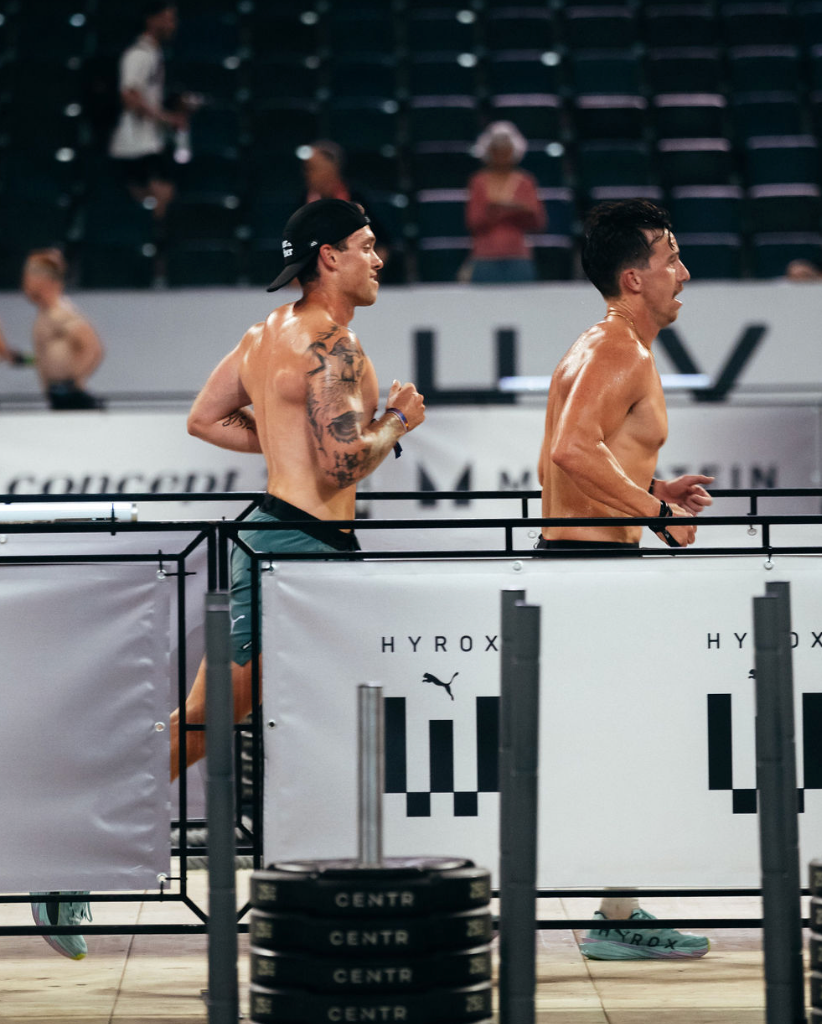
After a marathon or HYROX, the work is fluids, carbohydrate plus protein, sleep, and muscle-damage repair—not more intensity. A practical first-48-hours guide.
The finish line feels like the end. Physiologically, it is the start of the expensive part.
A marathon or a HYROX final is a long bill: glycogen run down, fluid and electrolytes lost in sweat, muscle fibers damaged, and a nervous system that is still treating the day as an emergency. None of that is a character test. It is the same problem from the other side of the race you just ran. The next 48 hours will not rebuild you completely. They will decide whether you stabilize or dig a hole that takes the rest of the week to climb out of.
This is not a new training block. It is a short, boring, high-return protocol: replace what you lost, feed repair, sleep, and leave the “I should stay loose with a hard session” instinct at the door.
1. Know what actually broke
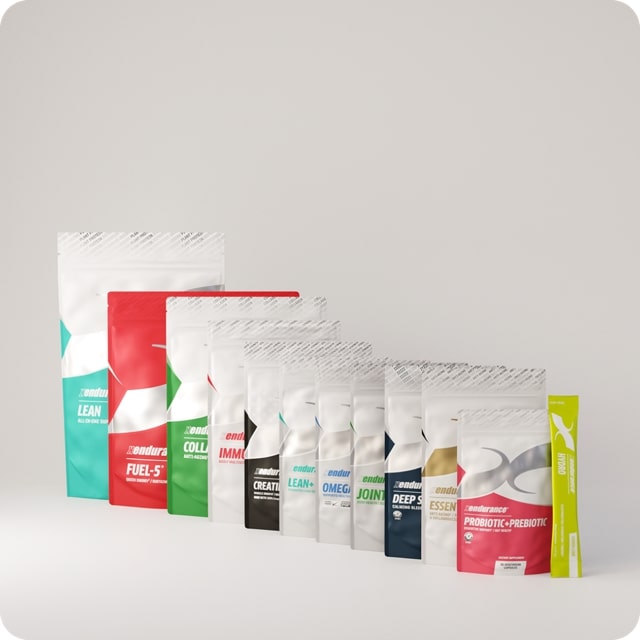
Glycogen is the first constraint. Even with solid carb-loading, muscle and liver stores typically support about 90–120 minutes of hard running before they become critically low. That is why the wall shows up in the later miles, and why a HYROX that stacks runs with sleds, wall balls, and burpees feels like it empties more than one tank. Taking in carbohydrates, such as the Xendurance Fuel-5, during the event helps. It does not leave you fully restocked at the finish, but it provides fuel during the event.
Sweat is the second bill. Fluid loss drops plasma volume, makes the heart work harder to deliver oxygen, and takes sodium, potassium, magnesium, and chloride with it. Even about 2% body-weight loss in fluid (roughly 3–4 pounds for a 150-pound athlete) is enough to impair performance. In heat or long efforts, losses can reach 1–3 liters per hour. You do not stop paying that debt the moment you stop the watch.
The third piece is muscle trauma. Creatine kinase (CK) in the blood is a standard marker of muscle-fiber damage. It rises after hard efforts; when it stays high, soreness lingers, and quality training has to wait. That is a different problem than the burn you felt at mile 20 or station six. That burn is largely hydrogen-ion buildup, not “lactic acid poisoning.” Lactate is a fuel your body shuttles and oxidizes, not a toxin you need to “flush.” Recovery is not about punishing lactate. It is about glycogen, fluid, electrolytes, and actual tissue damage.
2. Hours 0–4: fluids and electrolytes first
Start with fluid and sodium, not a victory beer and a three-hour sit.
Sip. Do not chug. Use urine color (pale yellow) as a rough check, and if you can, compare pre- and post-event body weight the way you would after a long training run. The American College of Sports Medicine’s joint position on nutrition and athletic performance is blunt: adequate food and fluid before, during, and after exercise help maintain blood glucose, support performance, and improve recovery time.
Electrolytes belong in that first window because water alone does not replace what left in sweat. Hydro is built for that job: a stick-pack mix of sodium, magnesium, potassium, and chloride, with chelated minerals for absorption, plus B6, B12, and lactate as an additional carbohydrate fuel. Mix one stick in 8–16 ounces of water. You can use it before, during, or after; after a marathon or HYROX, “after” is the point. It is Informed Sport certified, which matters if you race under a testing program. Hydro is not a summer-only product. Air-conditioned recovery days still count.
3. Then eat carbohydrate plus protein—before hunger becomes a strategy
Carbohydrate plus protein, not protein alone.
After a long event, prioritize both. A scoop of Xendurance Protein (about 20–23 grams of a hydrolysate-heavy blend, with isolate and caseins for mixed release) in a small amount of liquid is an easy first hit if solid food still feels like a negotiation. Pair it with real food as soon as you can tolerate it—rice, potatoes, fruit, yogurt, a sandwich. If you still have Globs (energy gummies) in the bag, they are fair game in those hours. They were designed as a carbohydrate from organic sweet potato, not as a medal-ceremony prop. Each serving (6 gummies) provides 12 grams of carbohydrate.
Do not wait for hunger to become a plan. Appetite is unreliable when you have been at 75–85% of VO2 max for hours.
4. The rest of day 1 is repair, not a test
Walk if walking feels better than collapsing on the couch. That is circulation, not training. Foam roll if it helps you sleep. Do not “shake out” with intervals, a tempo, or a hero metcon because you are afraid of getting stiff.
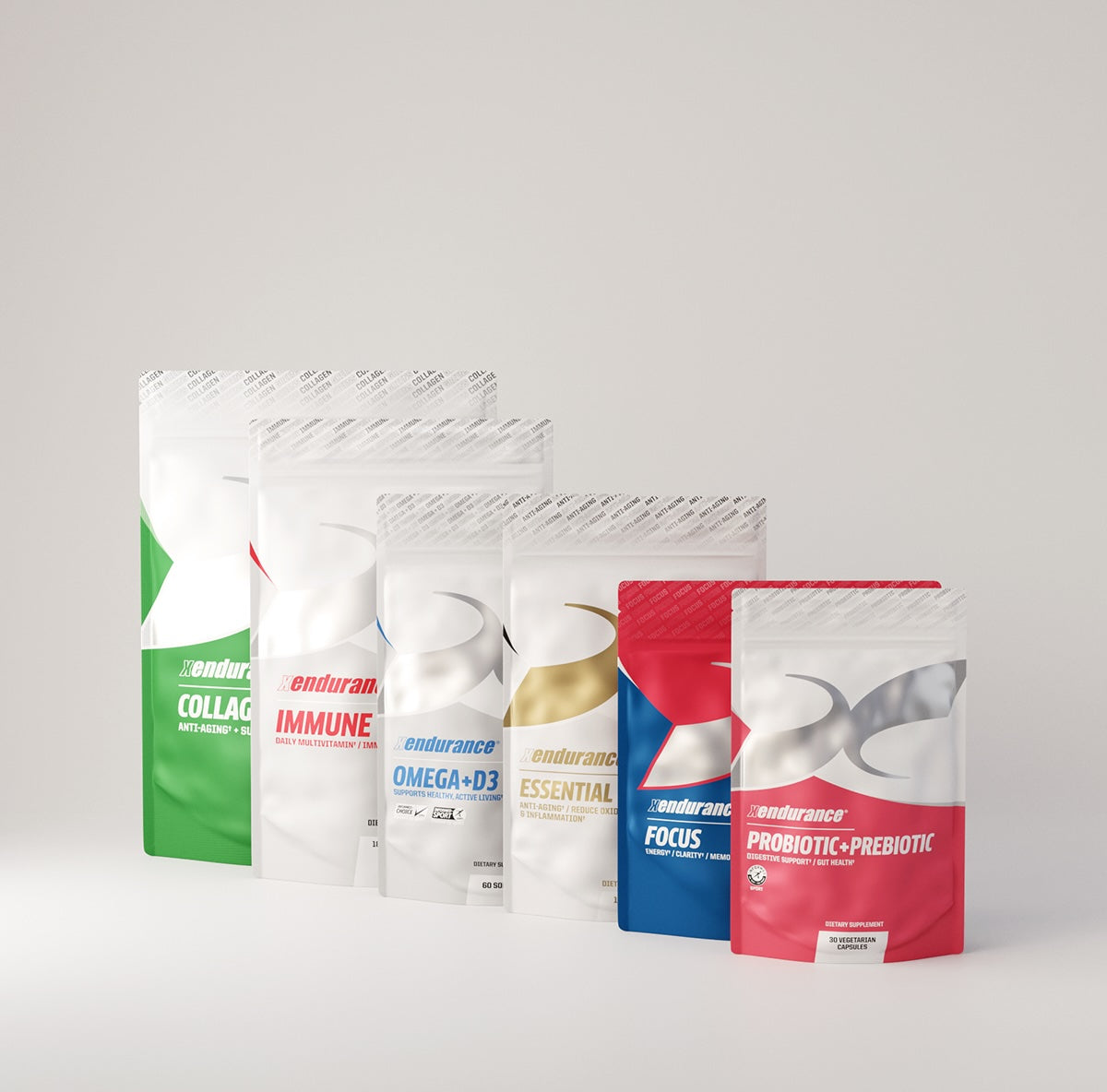
If you already use Extreme Endurance, this is not the day to skip it. It is a daily mineral formula—three tablets in the morning, three in the evening—not an acute race-morning stimulant. In a 10-day university study at the University of Louisiana at Lafayette, daily use was associated with a 26% reduction in lactic acid, a 39% reduction in post-exercise oxidative stress, and a six-fold reduction in creatine kinase versus the study’s control conditions. An earlier published trial in Germany (2010) reported an average 15% lactic acid reduction in 22 elite athletes over 10 days, with a double-digit rise in aerobic threshold.
Those are 10-day, consistent-use results. They are not a promise that six tablets at the finish line will erase a marathon. They are the reason this product lives in the recovery collection: less measured muscle trauma over time, if you take it like a multivitamin instead of a luck charm.
One constraint that belongs in print: do not add a standalone high-dose magnesium (about 300 mg or more) on top of Extreme Endurance. The six-tablet dose already supplies magnesium; extra can work against the formula.
5. Treat sleep like a session you cannot miss
Sleep is the highest-leverage hour you still control. Prioritize 7–9 hours. That is when a large share of cellular repair happens, and it is the same target that matters when overreaching starts to look like overtraining.
If your brain will not downshift—common after an all-day sympathetic spike—Deep Sleep is the evening formula: two capsules, with 2 mg of melatonin in that two-capsule serving, plus valerian root, GABA, tryptophan, and 5-HTP. It is a sleep aid, not a recovery drink. Start with the label dose; some people do better on one capsule. Do not treat vivid dreams or next-morning grogginess as a badge. Adjust or skip.
Do not treat Extreme Endurance, Hydro, or protein as a substitute for sleep. They are not.
6. Day 2: eat like you have a repair job
The second day is where people under-eat because they “aren’t training.” You are repairing.
Keep carbohydrates in the meals. Keep protein in every sitting. For active people in a recovery hole, 1.6–2.2 grams of protein per kilogram of body weight is a working target—not a medical prescription, a way to stop the “I’ll just have a salad” mistake. The 2025–2030 Dietary Guidelines already moved the general adult range up to about 1.2–1.6 g/kg. After a marathon or HYROX, you are not the general adult on a rest day. You are closer to the higher end until appetite, swelling, and sleep normalize.
Keep hydrating. If morning resting heart rate is up 5–10 beats from your baseline, that is incomplete recovery, not a cue to “sweat it out.” Cut volume. Walk, easy swim, or nothing.
If you track HRV, use it as a brake, not a scoreboard. A suppressed number after a race is expected. The useful question is whether it is climbing back toward your baseline by 48–72 hours, not whether you can force a workout on a low day.
7. What not to do
- Do not start a new supplement stack on tired kidneys and a wrecked gut.
- Do not double protein scoops to “heal faster” if you cannot keep food down.
- Do not confuse leftover race adrenaline with readiness.
- Do not treat any capsule or stick pack as a stand-in for sleep.
- Do not copy someone else’s 48-hour “active recovery” circuit from social media. Your CK, your gut, and your autonomic system did a different race than theirs.
8. A simple 48-hour checklist
Finish: fluid with electrolytes (Hydro is one practical option), then carbohydrate plus protein as soon as you can.
Afternoon/evening: real meals, more fluid, Extreme Endurance if it is already part of your day, 7–9 hours of sleep (Deep Sleep only if you actually need help getting there).
Next day: protein-forward meals, easy movement or rest, no intensity, watch resting heart rate and how you feel when you wake.
Day 3 and beyond: let quality sessions wait on energy, mood, and legs—not on the calendar.
A marathon or HYROX asks for a performance. The first 48 hours ask for a system. Fuel the system, then leave it alone long enough to use what you fed it.


Leave a comment
This site is protected by hCaptcha and the hCaptcha Privacy Policy and Terms of Service apply.