



Beetroot nitrates are not a caffeine-style pre-workout: they need a two-to-three-hour conversion window, and antiseptic mouthwash can blunt the pathway.
Caffeine can be in your system in minutes. Dietary nitrates from beetroot cannot. That difference is why so many athletes drink a beetroot mix at the start of a warm-up and then wonder why nothing changed.
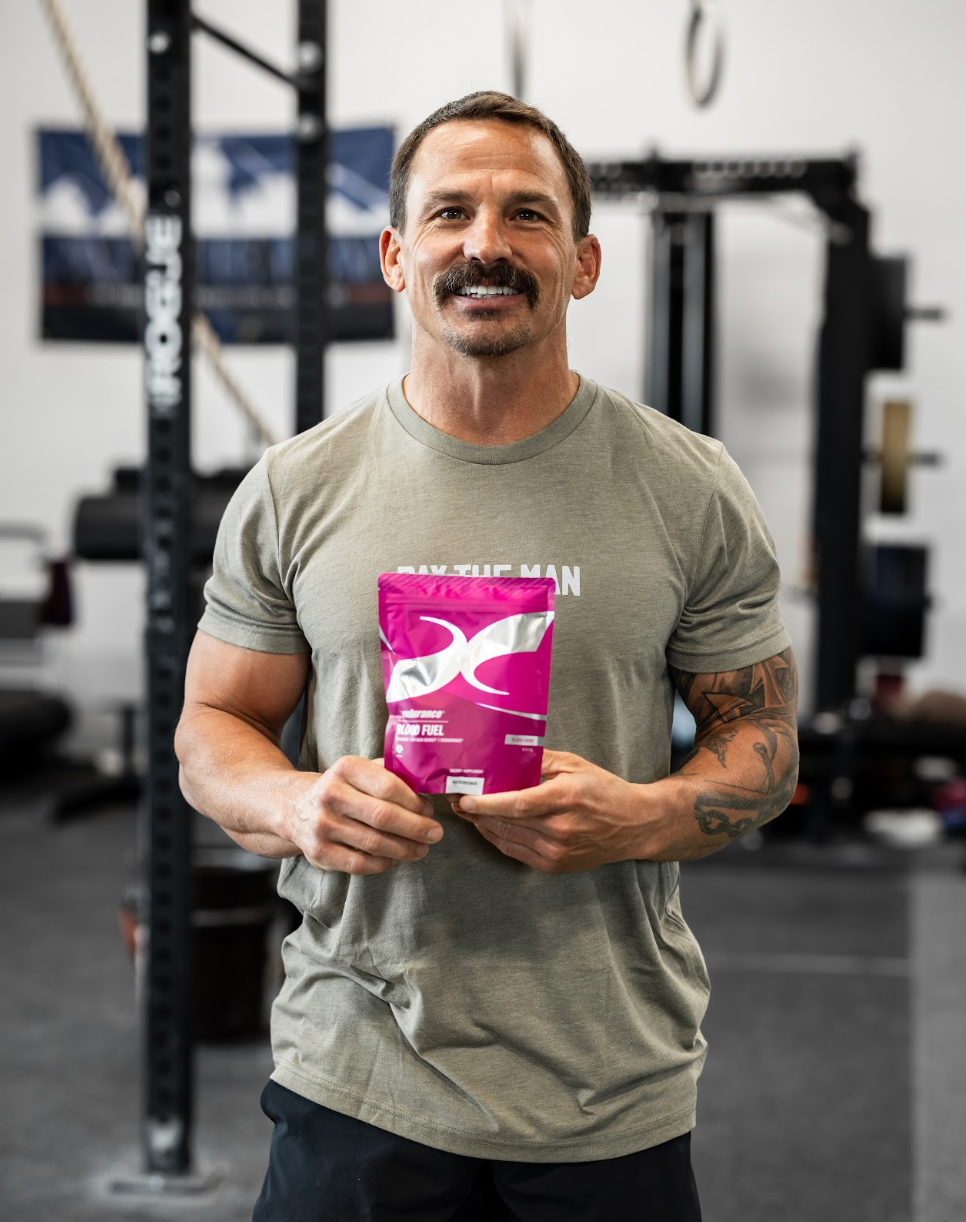
Xendurance’s Blood Fuel page is unusually specific about this. For performance, the product is meant to be used 2–3 hours (120–180 minutes) before exercise—what the company calls the “Golden Window.” That is not a slogan. It is the time the body needs to convert nitrate into the molecule that actually affects blood flow.
If you treat beetroot like espresso, you will miss the point of the tool.
Why beetroot is not a caffeine-style pre-workout
Beetroot is rich in dietary nitrates. Those nitrates do not go straight to working muscle. They have to be converted, first to nitrite and then to nitric oxide (NO)—a vasodilator that relaxes blood vessels and can improve circulation and oxygen delivery during hard efforts.
That conversion is not instant. After you swallow a nitrate-rich drink, plasma nitrate typically rises first. Plasma nitrite—the more useful circulating marker for this pathway—peaks later. In a 2013 dose-response study in the Journal of Applied Physiology, Wylie and colleagues found that plasma nitrite rose in a dose-dependent way after concentrated beetroot juice, with peak changes at about 2–3 hours. Exercise tests in that study were run 2.5 hours after ingestion.
The Blood Fuel FAQ describes that conversion as the enterosalivary nitrate-nitrite-nitric oxide pathway. A large part of the first step happens in the mouth, on the tongue, via specific bacteria. Nitrate is absorbed, a portion is concentrated in saliva, oral bacteria reduce it to nitrite, you swallow that nitrite, and the body can then generate nitric oxide in the gut, blood, and working tissue. Reviews of that enterosalivary circuit make the same point: the oral microbiome is not a side note. It is part of the mechanism. That is why timing—and even mouthwash—matter more for nitrates than they do for a stimulant.
This also clarifies what the tool is for. Dietary nitrates from beetroot tend to improve exercise economy and time-trial performance more reliably than they raise maximal oxygen uptake itself. In a 2009 Journal of Applied Physiology trial, Bailey et al. showed that several days of beetroot juice reduced the oxygen cost of moderate exercise and extended time to exhaustion in severe exercise. In a 2011 Medicine & Science in Sports & Exercise study, Lansley et al. gave club cyclists a single beetroot dose about 2.5 hours before 4-km and 16.1-km time trials. Oxygen uptake during the trials did not rise; power did. Times improved by about 2.8% and 2.7%.
In plain terms, the job is using the oxygen you already have more efficiently—not magically lifting the ceiling. You still have to train the engine. Beetroot is trying to make the same engine waste less oxygen at a given pace.
A 2020 meta-analysis in Medicine & Science in Sports & Exercise is useful here for expectation-setting. Across 80 randomized crossover trials, nitrate supplementation improved performance on average, but the effect was small. It was clearer in recreationally active young men than in elite endurance athletes. That matches the product’s own framing: this is an efficiency tool, not a new VO2 max.
The two-to-three-hour window
Unlike fast-acting caffeine, dietary nitrates need time for that mouth-to-stomach conversion. The Blood Fuel FAQ states that plasma nitrite peaks in the 120–180 minute window, and that taking the product closer to the session—or later—reduces the effect. That lines up with the Wylie pharmacokinetics: peak nitrite around 2–3 hours, with the exercise tests placed inside that window.
That is the practical answer to “when should I take beetroot before a run, ride, or HYROX?”: not as you lace up. Mix one scoop in about 12 oz of water, two to three hours out, then go about the rest of race-morning or session prep.
Think in real clocks, not supplement slogans.
If the session starts at 7:00 a.m., the window is roughly 4:00–5:00 a.m. That is inconvenient. It is also the point. The product is asking you to treat nitrate like a timed biological process, not like a gel you open in the corral. If the session starts at noon, 9:00–10:00 a.m. is the easier version of the same rule.
The research pattern behind that advice is consistent enough to take seriously. After a nitrate-rich beetroot dose, plasma nitrite commonly peaks around two to three hours, remains useful for several hours after that, and then declines toward baseline over the rest of the day. Take it too close to the start and you are still on the rising slope. Take it too early and you may already be past the best part of the curve by the time the hard work begins. The same Senefeld meta-analysis noted that timing relative to exercise mattered, with the better performance signal clustering around ingestion 2–3.5 hours before the start.
There is a second clock as well. For everyday circulation and heart-health support, the same Blood Fuel page recommends a different rhythm: take it consistently at the same time daily (for example, morning). Those benefits are described as building over days to weeks rather than from a one-off dose. Some endurance protocols also use several days of nitrate intake before a key event, then keep the final dose inside the two-to-three-hour window. Bailey’s original beetroot study used six days of intake, not a single panic scoop.
Two jobs. Two clocks.
The performance clock is acute: get plasma nitrite up before the first hard interval, the first run-off-the-bike, or the first HYROX station. The daily clock is cumulative: keep the nitrate pathway fed so circulation support is not a one-shot experiment. Mixing those up is how people decide “beetroot does nothing.” Often the product did something. It just did it two hours after they needed it.
The mouthwash mistake
If the first conversion step depends on oral bacteria, killing those bacteria can blunt the rest of the pathway.
The Blood Fuel FAQ recommends avoiding antibacterial (antiseptic) mouthwash when using Blood Fuel or any beetroot-based nitric oxide supplement. It states that strong antibacterial rinses—especially those containing chlorhexidine, cetylpyridinium chloride, or similar antiseptics—can kill a large portion of nitrate-reducing bacteria, often by 80–90% or more. Less conversion to nitrite means a smaller nitric oxide effect.
This is one of the few supplement timing rules that has nothing to do with the scoop and everything to do with the mouth. In a 2008 Nitric Oxide study, Govoni et al. gave healthy volunteers an oral nitrate load with and without a chlorhexidine mouthwash. The mouthwash did not stop nitrate from appearing in saliva or plasma. It did abolish the conversion of that nitrate to nitrite in saliva and markedly cut the rise in plasma nitrite. The authors’ conclusion was blunt: the acute plasma-nitrite increase after a nitrate load depends on oral bacteria.
A later 2013 trial in Free Radical Biology and Medicine pushed the same pathway into blood-pressure territory. Kapil et al. had 19 healthy adults use a chlorhexidine antiseptic mouthwash for seven days. Oral nitrite production fell by 90%. Plasma nitrite fell by 25%. Blood pressure rose by about 2–3.5 mmHg, and the rise tracked the drop in circulating nitrite.
Race morning makes this easy to miss. Athletes brush, rinse, and then drink the beet mix because that is the hygiene sequence they already have. If the rinse is a therapeutic antiseptic, the sequence can work against the supplement. Ordinary toothpaste is not the same issue as a chlorhexidine or CPC antiseptic rinse, but the product’s own guidance is clear: do not wipe out the nitrate-reducing bacteria around the dose if the goal is the nitrate pathway.
If you use a therapeutic antiseptic rinse for a dental reason, talk with your dentist or physician before changing it. Oral health is not optional. For athletes using beetroot specifically for nitric oxide, skipping that class of mouthwash around dosing is the product’s own guidance—not a general instruction to abandon prescribed care.
This is also why “I took beetroot and felt nothing” is an incomplete experiment. Timing, oral bacteria, dose, training status, and the type of effort all sit in the same chain. Break the first link and the rest of the chain never gets a fair test.
What this is not: carbohydrate fuel
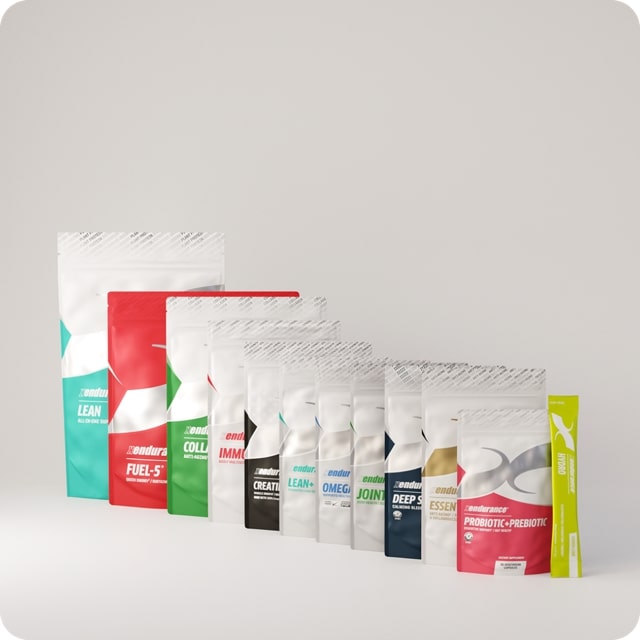
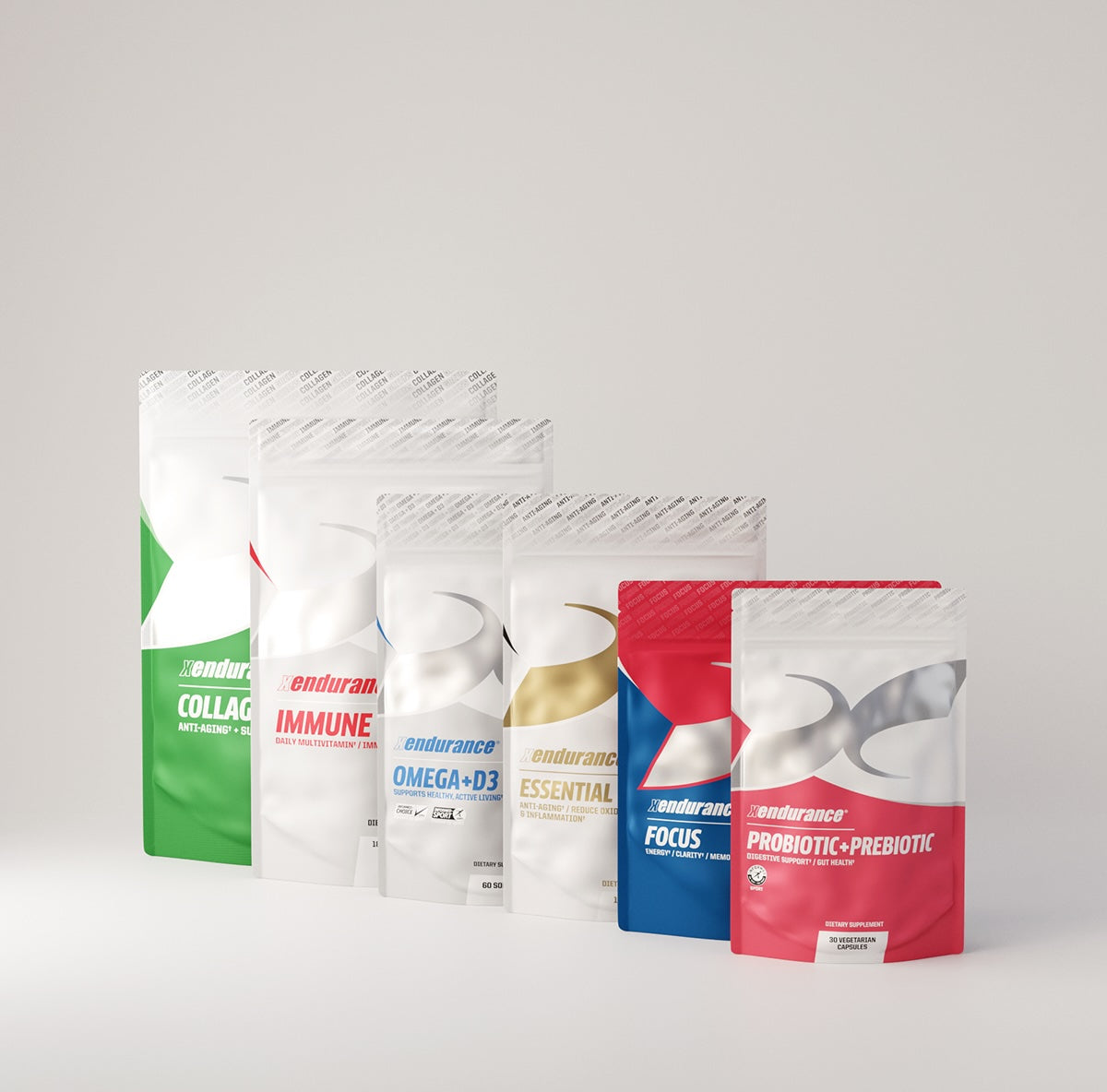
Blood Fuel is not a carb product. The formula is built around 5g of organic beetroot powder, plus tart cherry, pomegranate, blueberries, and lemon powder. It does not replace the carbohydrate you need for long efforts.
That distinction is in the product FAQ. Blood Fuel is positioned for oxygen delivery and recovery support: nitric oxide from beetroot, anti-inflammatory compounds from tart cherry, antioxidants from pomegranate and blueberries, vitamin C from lemon. Fuel-5 is the carbohydrate tool—organic sweet potato, sucrose, dextrose, maltodextrin, plus lactate, electrolytes, and vitamins B6 and B12—for pre-, intra-, and post-session fueling. Globs are the portable carb gummy (12 g of carbohydrate per 6 pieces).
Same training day can use both jobs. They are not the same job.
This is where beetroot marketing often gets sloppy. A red drink before a long run looks like fuel. It is not enough fuel. A nitrate product can help the muscle use oxygen a little more economically. It cannot refill glycogen. If the session is 90 minutes or more, or if the race includes repeated high-output efforts, carbohydrate still has to be planned on its own timeline: before, during, and after.
Keep the roles separate and the morning gets simpler.
- Blood Fuel: 2–3 hours out, for the nitrate window.
- Fuel-5 or another carb drink: closer to the start and during the work, for energy and electrolytes.
- Globs or other portable carbs: on the course or mid-session, when you need carbohydrate you can actually take in.
Using all three on one day is not “stacking magic.” It is matching tools to jobs. Oxygen delivery is not calories. Calories are not recovery polyphenols. Recovery polyphenols are not a race-day breakfast.
How to use the window
- Key workout or race: one scoop in about 12 oz of water, 2–3 hours before you start.
- Daily circulation support: same time each day; the product page describes those benefits as cumulative.
- Do not treat it like caffeine. Closer is not better.
- Avoid antiseptic mouthwash around dosing if your goal is the nitrate pathway.
- Keep carbohydrate fueling separate. Blood Fuel does not replace Globs or Fuel-5 on long sessions.
- The Blood Fuel page notes the product is Informed Sport certified. That is a product fact, not a substitute for reading the label and checking the IS website.
A workable race-morning template looks like this. Wake up. Mix the scoop. Drink it. Then eat the breakfast you already trust, use the bathroom, pin the bib, and warm up. The nitrate dose should already be working by the time the session starts. If you only remember the scoop when the start clock is visible, skip the panic pour. You are too late for the conversion window, and a late dose will not behave like a caffeinated gel.
For training days that are not races, the same logic still applies to quality work: threshold, VO2 intervals, long bricks, HYROX simulations. Easy recovery spins do not need a ceremonial nitrate protocol. Save the timing discipline for the sessions where economy actually shows up in the split.
If you want the daily circulation rhythm as well, pick a time you can repeat. Morning is the obvious choice because it is easy to remember and it keeps the performance window available later in the day. Consistency matters more than finding a perfect hour.
One more practical note: test the drink in training before you use it on race day. Beetroot products can sit differently from person to person. The window only helps if the stomach cooperates.
Use it as a window, not as a last-minute shot
Beetroot will not fix a missed long run, a bad night of sleep, or an empty fuel tank. The nitrate pathway is real, but it is also conditional. It needs enough time. It needs the oral bacteria that start the conversion. It needs a dose that is actually meant for the job. And it needs an effort where oxygen efficiency matters.
That is why the two-to-three-hour window is the whole story, not a footnote. Caffeine is a stimulant with a short on-ramp. Dietary nitrate is a conversion process with a longer one. Drink it at the start of the warm-up, and you have asked the body for a result it has not had time to produce.
Used on its own terms—early enough for conversion, without wiping out the bacteria that do the converting—it is a practical oxygen-efficiency tool. That is the window. Use it as a window, not as a last-minute shot.
Selected studies and sources
Xendurance Blood Fuel product page and FAQ — Golden Window timing, mouthwash guidance, formula, Informed Sport note
Wylie et al., 2013, J Appl Physiol — plasma nitrite peaks ~2–3 hours after beetroot juice; dose-response for oxygen cost and exercise tolerance
Bailey et al., 2009, J Appl Physiol — beetroot juice reduced the O₂ cost of moderate exercise and extended severe-exercise tolerance
Lansley et al., 2011, Med Sci Sports Exerc — acute beetroot dose ~2.5 hours pre-trial improved 4-km and 16.1-km cycling time trials without raising VO₂
Senefeld et al., 2020, Med Sci Sports Exerc — meta-analysis: nitrate can improve performance, effect is small, timing 2–3.5 hours before exercise is the better window
Govoni et al., 2008, Nitric Oxide — antibacterial mouthwash abolishes salivary nitrate-to-nitrite conversion and blunts the rise in plasma nitrite
Kapil et al., 2013, Free Radic Biol Med — chlorhexidine mouthwash cut oral nitrite production ~90% and plasma nitrite ~25%
Hezel & Weitzberg review of the oral microbiome and nitric oxide — enterosalivary nitrate–nitrite–NO pathway


Leave a comment
This site is protected by hCaptcha and the hCaptcha Privacy Policy and Terms of Service apply.