



VO2 max is the most oxygen your body can use during hard exercise. It peaks in the late 20s or early 30s, then declines about 10 percent per decade in people who stop training hard. Adults who keep doing intense aerobic work often cut that loss closer to 5–7 percent. The number is one of the strongest fitness markers tied to heart health and longevity, and it is still trainable at 40, 60, and beyond. A lab test measures it. A watch only estimates it.
What the number actually is
VO2 max, maximal oxygen uptake, is usually reported in milliliters of oxygen per kilogram of body weight per minute (ml/kg/min). During a true max test it is the highest rate at which your lungs take oxygen in, your heart and blood deliver it, and your muscles use it.
Two versions matter more as you age. Absolute VO2 max is total oxygen used per minute. Relative VO2 max divides that by body weight. Charts and watches use the relative figure. Gaining fat lowers it even if the engine is unchanged. Gaining muscle without adding aerobic work can do the same. Losing excess weight raises the relative score even before the heart adapts.
For daily life, the score is not just a race metric. Walking up stairs, carrying groceries, and recovering from illness all draw on the same system. A higher ceiling leaves more reserve when that demand shows up.
Why it is worth tracking as you get older
Cardiorespiratory fitness tracks mortality more tightly than most routine risk factors. In a Cleveland Clinic cohort of 122,007 adults who did treadmill tests, the fittest group for their age and sex died at about one-fifth the rate of the least fit (Mandsager et al., JAMA Network Open, 2018). In 750,302 U.S. veterans aged 30 to 95, the least fit had about four times the mortality risk of the most fit, and the pattern held in women, across racial groups, and into the 70s and 80s (Kokkinos et al., Journal of the American College of Cardiology, 2022). Being unfit carried more risk than the cardiac risk factors the authors compared it with. There was no penalty for being extremely fit.
For athletes, VO2 max sets the ceiling. Race results also depend on the fraction of that ceiling you can hold and on economy, the oxygen cost of a given pace. Strength work often improves economy without moving VO2 max. That is why a flat watch number and a faster race can both be true.
How age changes VO2 max
The decline is biological, not just motivational. Maximum heart rate falls, so the heart delivers less blood per minute at full effort. Stroke volume, the blood pumped per beat, becomes harder to raise. Arteries stiffen. Lung capacity drops. Muscle loses capillaries and mitochondria, so less of the oxygen that arrives gets used. Relative scores also slip if body fat rises.
Population norms make the slope obvious. The 2022 FRIEND registry of directly measured treadmill tests is the current reference (Kaminsky et al., Mayo Clinic Proceedings).
Median VO2 max by age, in ml/kg/min, from the 2022 FRIEND registry:
Ages 20–29: men 46.5, women 36.6
Ages 30–39: men 39.7, women 28.3
Ages 40–49: men 35.3, women 25.7
Ages 50–59: men 29.2, women 22.9
Ages 60–69: men 24.6, women 19.6
Ages 70–79: men 20.6, women 17.2
“Good” is roughly the 70th percentile or better for your decade, not a single number for all adults. A 35 for a man in his 40s is average. The same 35 for a man in his 60s is strong. Women’s values sit lower at every age, largely from hemoglobin, heart size, and body composition, so sex-specific rows are the only fair comparison. Older Cooper Institute tables used in some ACSM charts run a few points higher. Do not mix the two.
Training changes the slope, not the direction. Sedentary adults lose about 10 percent per decade after the late 20s. Consistent vigorous training is associated with a decline closer to 5–7 percent. Masters athletes still beat sedentary peers decades younger. The ceiling is lower than it was at 25. The gap between trained and untrained gets more important, not less.
Lab test versus the watch on your wrist
A cardiopulmonary exercise test is the reference. You walk, run, or cycle through rising stages with a mask measuring oxygen and carbon dioxide and a monitor on heart rate. Clinics and performance labs run these. Get clearance first if you have symptoms or are new to hard exercise.
Watches do not measure gas exchange. They estimate VO2 max from heart rate, pace or power, and your age, sex, and weight.
Garmin, using Firstbeat, estimates from outdoor runs and from rides if you have a power meter. In endurance athletes, independent checks put typical error around 5–8 percent, often a few points low, with larger misses above about 60 ml/kg/min. Apple Watch Cardio Fitness estimates from outdoor walks, runs, and hikes. Two recent lab comparisons, including a Series 10 study in Mayo Clinic Proceedings: Digital Health, found it about 6 ml/kg/min low on average, with roughly 13 percent error, and it often placed people in the wrong fitness band. Polar and COROS are in the same range.
Whoop and Oura track recovery and strain, not a lab-style VO2 max.
Age is baked into the algorithm, so a watch can call a lower absolute score “above average” for a 55-year-old. That label is only as good as the estimate. Use one device, outdoors, for 6–12 weeks. A one-point swing after a single run is noise. A steady rise of 2–4 points after a block of intervals is a signal. If the watch and a race disagree, trust the race.
What actually raises it after 40
Intervals do the most per minute at every age, provided the joints can take them. A 2026 meta-analysis found high-intensity intervals beat moderate continuous training for VO2 max, with most of the gain from sessions around 11 minutes of hard work. A review of 115 trials found about a 1.3 ml/kg/min edge for intervals. In already trained athletes, added interval or sprint work is the supplement with the most consistent support.
A practical week: one or two sessions such as 4 × 4 minutes at about 90–95 percent of max heart rate, with 3 minutes easy, or 5 × 3 minutes at a pace you could hold for 10–12 minutes. Fill the other days with easy aerobic volume. Strength work twice a week will not meaningfully raise VO2 max in trained people. It does protect economy, bone, and the muscle that disappears with age, which is why it stays in the program. Circuit lifting with short rest can nudge the score in people who are currently unfit, mostly because any new work does.
Untrained adults can gain on the order of 15–25 percent in 8–12 weeks. Trained athletes should expect 1–3 ml/kg/min from a well-built block. After 50, progress the hard sessions. Jumping straight into VO2 work raises injury risk even in fit runners.
Low iron can cap oxygen delivery, especially in menstruating athletes, and is worth a blood test if fitness stalls. Sleep and enough food let the intervals stick. Breathing drills can help ribcage mechanics. They will not add several points on their own.
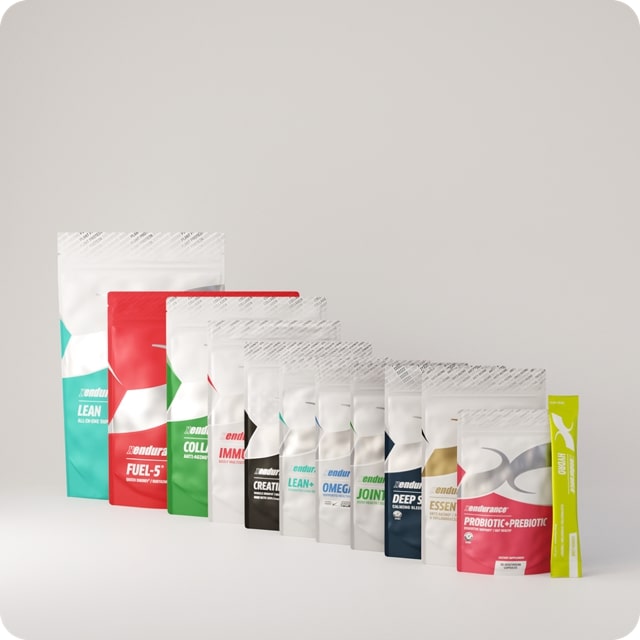
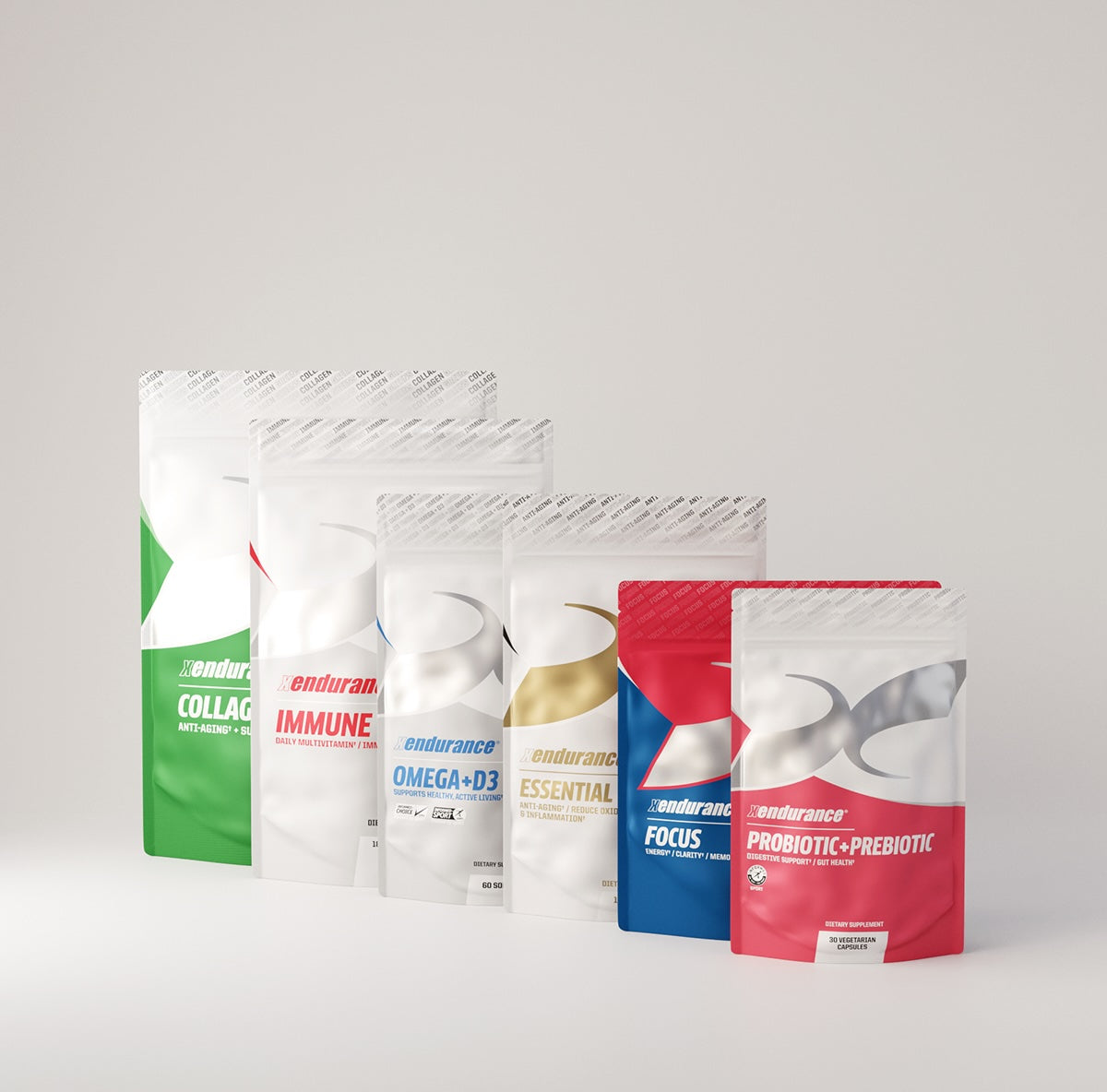
Where the sports supplement Extreme Endurance fits
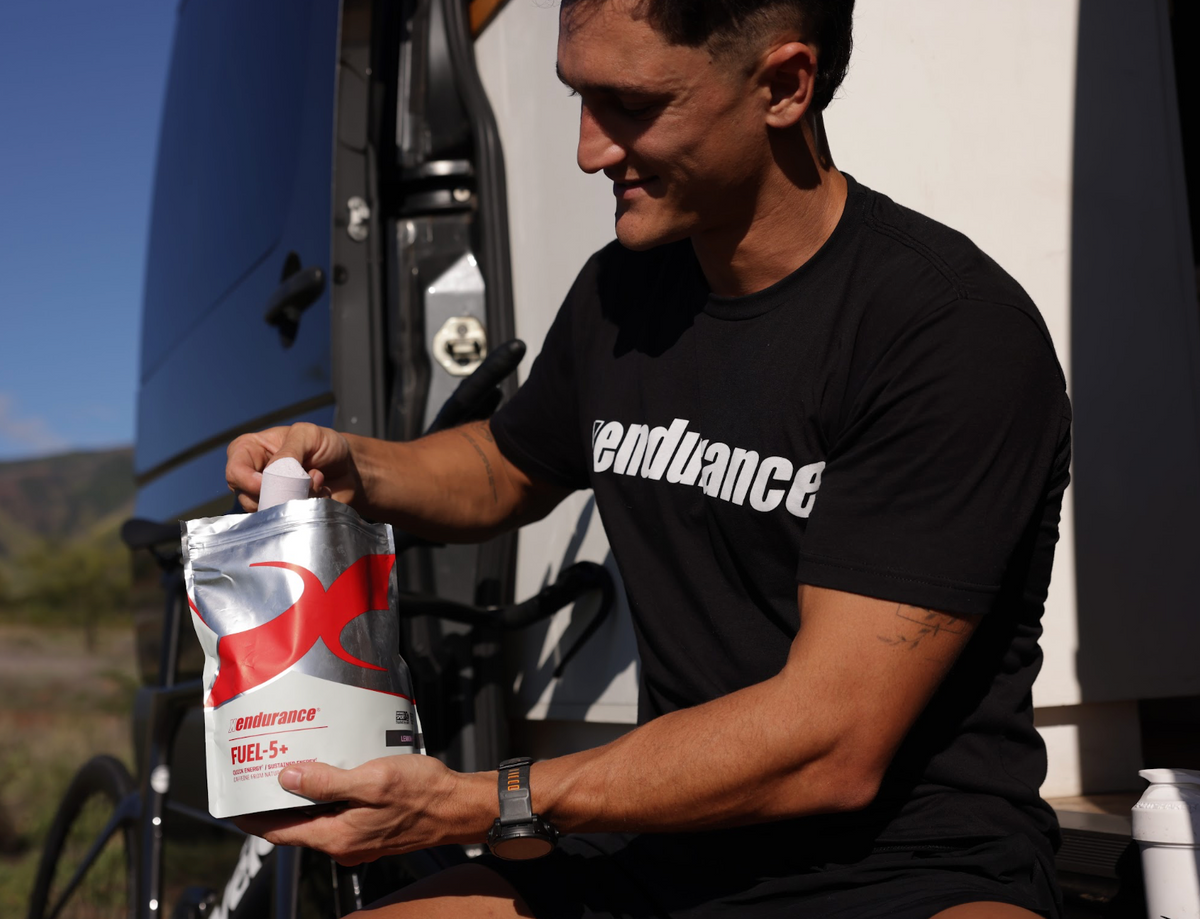
Training is the driver. Buffering and recovery are the support. Extreme Endurance, a mineral formula aimed at acid-base balance, has been tested against that second job.
In a double-blind, placebo-controlled crossover at Corpus Diagnostik in Hilpoltstein, Germany, Dr. Volker Tzscheetzsch and Jürgen Sessner tested 22 elite athletes for 10 days, with a washout and crossover. Average lactic acid was about 15 percent lower on the product, and aerobic threshold rose by double digits. The researchers then followed 6 of those athletes for 30 days of use to see whether VO2 max itself would move. That smaller follow-up showed a 1.5 percent increase in VO2 max. A later placebo-controlled crossover in recreationally active men, published in the Journal of Athletic Enhancement in 2018, found lower peak lactate after 10 days and no significant change in aerobic performance over that short window.
Read those results in scale. A 1.5 percent VO2 max change in six athletes over a month is a small shift next to what intervals do in an untrained adult, and it is in the range a watch can miss. The clearer signal in the company testing is lower lactate and a higher aerobic threshold, which is the ability to hold work before the hard burn. That is a reason to keep the training block consistent, not a replacement for it.
Anna Sparks from Sparks Metabolic Systems tested active adults for 2 weeks. The results for VO2 Max using Extreme Endurance even surprised this professional. Anna then followed up by testing an 81-year-old. His score increased after two weeks without a change in diet or exercise. She said this was completely unexpected and explains why in this video.
How to read your score at your age
Get a baseline with a lab test, or with three or four weeks on one watch. Place it on the FRIEND row for your sex and decade. Run a six- to eight-week block with one or two interval sessions and the rest easy. Recheck with the same method. Look for a few ml/kg/min, a faster pace at the same heart rate, or both.
VO2 max will be lower at 60 than it was at 30. The useful question is whether yours is falling at the sedentary rate or the trained rate. Hard aerobic work sets that slope. A single watch tells you if it moved. A lab test tells you the real number.

Leave a comment
This site is protected by hCaptcha and the hCaptcha Privacy Policy and Terms of Service apply.